Ep227 Denise Stegall - Menopause in the Workplace: Breaking the $1.8 Billion Taboo



Schedule a Game Plan Intro Call Here
This 15-minute call is a chance for us to connect briefly and see if a full Game Plan Session is the right next step. No prep required — just bring your goals or questions, and we’ll explore whether a deeper dive makes sense.
______________________________
Your top female talent is quietly walking away from her career, and you have no idea why—because nobody's talking about the one thing that's costing your business $1.8 billion a year in missed work days.
In this episode, Mike O'Neill sits down with Denise Stegall, founder of Healthy Living with Denise and international best-selling author of "Healthy Living, Healthy Life," to tackle a workplace crisis that most leaders are still ignoring: menopause. With over 25 years of wellness expertise and 17 years focused specifically on menopause, Denise brings a refreshing perspective that reframes this as a business problem, not just a personal one.
The conversation cuts through the myths and misconceptions that are costing companies their best people. Denise explains how menopause begins earlier than most realize—often by age 40 with perimenopause—and how symptoms like sleep disruption, brain fog, and anxiety directly impact workplace performance. But here's what makes this episode essential: Denise reveals the practical, science-backed approach she calls the "midlife metabolic flip," which focuses on reducing inflammation through nutrition and lifestyle changes. She walks through exactly how this works and shares real examples of business owners who nearly quit their companies before understanding what was actually happening to their bodies.
Mike brings his signature leadership lens to the conversation, asking the hard questions about what companies can actually do right now. Denise doesn't hold back with actionable steps—from education and manager training to flexible work policies and menopause support programs that rival pregnancy benefits. She even shares the powerful story of two UK physicians who quit their jobs because of a simple request for schedule flexibility that was denied.
Key Insights to Look Out For:
• Menopause-related absences cost U.S. businesses $1.8 billion annually, and 13% of women have quit their jobs because of menopausal symptoms—yet most leaders still treat this as a personal issue rather than a business strategy problem.
• The "midlife metabolic flip" shows how inflammation amplifies menopause symptoms, and by addressing it through targeted nutrition and sleep improvements, women regain clarity, energy, and productivity—sometimes preventing them from leaving altogether.
• Companies that implement three core changes—education for leaders, flexible work arrangements, and formal menopause support policies—don't just retain top talent; they build healthier cultures and unlock higher performance from their most experienced employees.
If you're a leader who's been overlooking this issue, this episode is your wake-up call. Listen now and take one action this week: educate yourself on what menopause actually is and how it affects your team. It could be as simple as reading a book, doing a search, or listening to Denise's podcast, "Healthy Living Happy Midlife." The conversation you have with your team next week could be the difference between keeping or losing your best people. Share this episode with other leaders in your network—they need to hear this too.
Denise Stegall 0:00
What are the two things that are happening simultaneously? We have this inflammation. We have our hormones going a little crazy, and so we need to understand that, and then we can say, Okay, how is my diet and my nutrition affecting both of those?
Mike O'Neill 0:18
Welcome to get unstuck and on target, the weekly podcast that offers senior leaders insights and strategies to not only lead with confidence and vision, but also to achieve groundbreaking results. I'm your host, Mike O'Neal I coach top level executives on the power of ethical leadership to forge teams to be as united as they are effective in each episode, join me for insightful conversations with leaders just like you providing practical advice to help you get unstuck and propel you and your company forward. Let's get started.
Mike O'Neill 1:01
As an executive coach, I remind leaders all the time, blind spots are expensive, and here's one that rarely gets talked about, menopause in the workplace, research shows that US businesses lose over 1.8 billion every year because of it, not because women aren't capable, but because too many leaders dismiss it as personal, instead of seeing it as a business issue. When leaders get this right, they don't just support women, they strengthen retention, build healthier cultures and unlock higher performance. That's why I invited Denise teagall to join me on this podcast. She spent decades helping women perform at their best, and together we unpack what leaders need to know to avoid this costly blind spot. My guest today is Denise stegal. She's a founder of healthy living with Denise, and she's also an international best selling author of healthy living, healthy life, with over 25 years in wellness, including 17 focused on menopause, Denise helps women feel better, think clearer and perform at their best at work and in life, I wanted to invite Denise on for a couple of reasons. One, I've known Denise for a while. I've been wanting to have her on a podcast, because when leaders dismiss menopause as something personal, they really risk losing top talent at the very moment that these women are bringing the most value. But when leaders understand it, they can strengthen that retention. They can build healthier cultures, and they can unlock even higher performance. So for those reasons, I wanted to have Denise on. Welcome Denise,
Denise Stegall 2:47
thank you so much, Mike. I'm so excited to be here today.
Mike O'Neill 2:51
Denise, you have already shared with me how you understand that this is an issue that's not just a personal issue. There's a business issue, and at least, it seems to me that many leaders might see menopause as something kind of personal or even off limits. Why should they see it more as a workplace issue?
Denise Stegall 3:12
Well, if they have women in the workplace, it absolutely is a workplace issue. Menopause begins so much earlier than most people understand, especially most men, by the age of 40, many, many women are already experiencing what is actually called perimenopause. And these symptoms can be sleeplessness, some irritability, some anxiety, a little bit of brain fog, which actually gets a little bit worse as women progress through menopause, when so these are women who are brilliant, who are good at what they do, but they're just struggling a little bit, and often, when they go to a Doctor, they're either told that it's just in their head, or they're given an antidepressant which doesn't address the symptoms. So when women are experiencing these symptoms and they're at work and they may not be so quick was they were just a year ago or just six months ago, their their mental clarity, their thought process. It takes a little bit more time. And so if that's perceived as a problem by leadership, by coworkers, then we definitely have an issue in the workplace.
Mike O'Neill 4:40
Gotcha, you know, I suspect there's a lot of misconceptions out there about menopause. How do those myths, if you would, hold businesses back.
Denise Stegall 4:52
Part of it is, we haven't really talked about menopause, or really until the last. Last 10 years, it's been quite taboo. Women have suffered in silence. They have gone to work. They've done the best they can. Suffered quietly in very often, either left the workplace, have gone down to part time, many, many women in their 50s, in their mid 50s, which is really when menopause is, is kind of at its peak. For most women, not for all. Um, they just step back from their career. They just can't take the pressure of work and symptoms and not sleeping and feeling that, you know, they're just not on top of their game.
Mike O'Neill 5:49
One thing that impresses me, you've not written one book, but multiple books, but I've read about something you call a midlife melabolic Flip. That's a mouthful. It is. I'm sorry. No, no, it's okay. I got it out. But how do women regain clarity and energy and boost productivity as a result of what is it? So can you tell us what is that and how does it work?
Denise Stegall 6:16
Sure, the midlife metabolic flip, as I love to call it, it focuses on inflammation. Now we know, in this day and age with our diets and our lifestyles that we have a ton of inflammation in our bodies. Inflammation makes symptoms of menopause worse. It makes sleeplessness, it increases our cortisol when we're constantly on that high fight and flight or fight feeling we can't sleep well, we can't think clearly, and that's not what our body is intent. You know, what the flight and fight is intended for. So the metabolic flip really looks at what's going on with each woman. Now we know inflammation is the the underlying cause of so many diseases that we have today in the Western world. Let's make let's just say, and menopause is just kind of brushed under the table like it's just not it's the connection between inflammation and menopause hasn't been made by many, many doctors, by some. Of course, it has. And so by looking at or reducing inflammation, specifically with nutrition, lifestyle, good decisions, you know, getting getting sleep when you know you can sleep, if a woman knows that she's struggling from three o'clock in the morning to five o'clock in the morning, she may need to go to bed a little bit earlier. So it really is looking at each individual person and tweaking what they're doing. For many women, it's a big change, especially with nutrition and lifestyle, sleep is probably the biggest challenge that women have through menopause. And menopause can be starting from perimenopause. It could be, I mean, I say I have 17 years of menopause experience because I started so young. And so when I say, these are things that women are don't understand, you know the symptoms, but the inflammation that increases all of or it or heightens all of the the symptoms that they're experiencing.
Mike O'Neill 8:33
So is this metabolic? Is this how you work with your clients, to address what could be some triggers, primarily through nutrition and improved sleep, is, can you walk us through the practical side of what is it we're talking about? How you help them? Absolutely.
Denise Stegall 8:50
Well, the first thing we do is to talk about inflammation, what it is, how it's affecting each of our systems. You know, our cardiovascular system, our digestive system, which could also be a reason why we're not sleeping so well, and our endocrine system, all of the systems in a woman's body that are actually affected by estrogen and inflammation. So I talk about inflammation and really help a woman to understand why this is important information to know and how it could be affecting her, kind of like that silent thing that all of a sudden, you know, kind of rears its ugly head, but it's been, you know, quietly, you know, making some you're making some noise, but then all of a sudden, it's, it's a problem. So I want to help women kind of get to that, get to the get to the problem before it becomes a problem. You know, address it before it comes a problem. So we start with focusing on inflammation. The next thing is to focus on hormones. For women, the most important hormones, estrogen, progesterone, testosterone and. Cortisol are the top four that we struggle the most with. And for most people, we think estrogen is the only one, yeah, and we think it's only something that we need for when we have when we're in childbearing years, estrogen actually has over 400 tasks in a woman's body, really, it does. It's amazing. And every year, they're finding more and more estrogen receptors in a woman's body. So that's the next piece. And then we look at nutrition. So we need a foundation. What is, what are the two things that are happening simultaneously? We have this inflammation, we have our hormones going a little crazy, and so we need to understand that, and then we can say, Okay, how is my diet and my nutrition affecting both of those
Mike O'Neill 10:58
I found myself coming most always back to work. We've got leaders who are watching and they're listening, and they want to be not only in the know, but they want to help, but they're not quite sure how. What might be some practical steps that companies can take that can support women in this transition?
Denise Stegall 11:18
Well, I think the first and foremost is education. All leaders need to understand, men and women, what are really going what's really going on? What is menopause and explain. You know, it's about awareness, but it's also about empathy, understanding. So we can prevent a bias, because there does seem to be a bias when it comes to women, oh, she's getting older, oh, she's getting a little cranky, you know? Oh, she's hard to work with now, right? There's a bias there. So education, training managers, training our leaders, first and foremost, the second thing, I think is really important when it comes to our health providers, are healthcare. Companies can have offer flexible work hours. They can have specialists. Some companies, and there are some companies that are really in the forefront of this, they have a menopause policy. They actually have support for women who need a little extra support, so that those few things right there, education and having a policy, and the having this as part of a health care kind of like pregnancy. You know, we have a program for pregnancy, there's actually a dialog now to have a program for menopause as well. And again, those are the things that I think are important. That's the flexible work, time, adjustable hours, those kinds of things.
Mike O'Neill 12:59
You know. Denise, as I'm listening to you, I have found myself inviting onto the podcast folks who have backgrounds in mental health, and I'm finding that our listeners really have kind of leaned in to that topic. And it's in my career this has gone from something that's been not acknowledged to something that it's talked about more, and what I'm sensing is that people have a tendency to almost lump menopause into kind of that mental health category that's and as a result, they're not really addressing this. So I'm I'm just really pleased I'm learning from you, but I'm also realizing now that that companies don't necessarily have to be and remain in the dark, that they need to be educated by chance. Do you work with companies? Do you offer some type of educational resources?
Denise Stegall 13:57
I'd like to answer that question. Can I can I table that for a quick moment? Of course, I'd like to address the mental health issue. Okay, in menopause, women do there is an increased risk of anxiety and depression that does go along with menopause. So it's not uncommon that it is getting kind of lumped in with mental health, typically, early on in the perimenopausal years, women are often given or a prescription for antidepressants that stage, more often than not. That's not the problem, but as menopause continues, yes, there is definitely an increased risk of anxiety and and mental health issues, depression, clinical depression. So I wanted to make that that piece clear, that there really is a connection there. Glad you did so. So to answer your next question, my goal actually is to work with my. And at this point, I'm not specifically working with companies. I would love to do that offer my services to companies. What I actually do now is I work with OB GYN and alternative medicine physicians who just don't have the time to work with a person who's really struggling with menopausal symptoms, and they have the basic information, but they don't have time to really nurture and work with them. So typically, they will recommend a client to see me, and of course, the first conversation is, is a free consultation, and then from there, we can decide, typically, I work with the metabolic flip with everyone, and that is, it's actually a group program, a rolling program with individualized Attention.
Mike O'Neill 15:59
I love this. So if a referral is made, or if someone's watching or listening, they could reach out to you. And what we know is that there will be a element of this Metabolic flip, but you use primarily a kind of a group approach with individualized attention. This is really interesting. Can you share maybe some examples of where support for women actually created actual business benefits.
Denise Stegall 16:30
A few years ago, before I started the metabolic flip, I was working with women in a group setting. Three of them were business owners, and they were struggling with, obviously, their sleep, because that's always the number one thing, because of the hot flashes and the night sweats. And each one of them was in a different phase of wanting to quit, you know, just wanting to pack it in and just say, you know, I can't do this anymore, you know, I can't take care of my clients the way I want to. You know, this isn't, this isn't how I imagined my business being at this stage. And so there were five of them in the group at the time. And like I said, there were three of these business owners, and each one of them understanding what the what the other two were going through. They're like, Wait a minute. You know, it's not just you that's experiencing this. And together, they actually came up with actionable steps that they could each take to make their businesses more personalized to them, again, to become all about the client. You know what the client needs, which is, of course, is why we do that. But if we're losing ourselves and trying to do everything for everyone, and not stepping back and saying, You know what, I don't take appointments until 10am you know, I work between 10 and three, let me think before after that has to go to the next day and actually reset boundaries that they hadn't, either hadn't set before or had let fall down. And that that, to me, was amazing because I was a facilitator. That's that was my job at that point as a coach, of course, that's what I do. I was just amazed at how these three women and the other two were actually a little bit younger. Two of them were in one was in marketing, and the other, I don't quite remember what her company well, who she worked for. They both work for organizations. So because they were in this group with these, these three older women and older by probably about 10 years. Huge face shift. We don't think it is when, by the time we're 40 and 50, that is a huge face shift for women. They actually were able to step back and say, Okay, I understand where these ladies are now coming from. How can I not get to that point in my job?
Mike O'Neill 19:02
Yeah, the Denise, this is obviously an unscripted conversation, but there may be some things you were saying. Gosh, I hope Mike asked me about because this is very, very important. Anything come to mind that you want to make sure that you have shared that would be helpful.
Denise Stegall 19:15
I think a couple of quick statistics would be really important for leaders to understand. I love, I love this statistic globally, the Mayo Clinic, which is just down the road from my house, estimates that menopause related missed work days costs US businesses $1.8 billion a year. I think that's a number that our leaders want to know, yes, in the UK, it's about 1.5 billion pounds. And these are two really big countries who have a lot of work and a lot of women working for them. When it comes to women wanting to quit their jobs or to. Change, 13% of women actually have quit their jobs because of menopausal symptoms. And there are two examples that blew my mind when I read about them. It's in this book. This is one of my favorite books called estrogen matters. It's by two people, Avram blooming and Carol tarvis. Love this book, the two of the women they were speaking with in this book are physicians in the United Kingdom, but they're both physicians. One of them basically dealt with her symptoms very quietly, but then workload, expectation, paperwork, all of the checking of the boxes that our physicians need to do nowadays became too much. It was overwhelming, and she just walked away the second at a different hospital. She went to her supervisor and explained what was going on and asked if she could just change her work hours a little bit. They had a seven o'clock meeting every morning, or, sorry, every every Monday. And that seven o'clock meeting was getting more and more difficult for her to get to because of her sleep issues the night before, when she did get there, she wasn't quite participating, because she she just wasn't ready yet. So she asked, you know, can we move this till maybe 888, or 830 or maybe, can we make it on a Tuesday or a Wednesday? And it was a small group meeting, so it wasn't an entire department. And the manager said, Well, you know, we've always done it this way. We've always had it this time, and it seems to work for everybody else. So no, and so again, she struggled. Came to work, and eventually bias was, you know, she's not pulling her weight, she's not paying attention. So she quit. These are two physicians, and in this day and age, we are in dire, dire need of talented physicians. At some point in the next handful of years, we are actually going to have a shortage. I believe they already do have a shortage of physicians in the UK, and I know that my family lives in the United Kingdom, so I have a little bit more I get a little bit more information about there than I do part other parts of the world
Mike O'Neill 22:21
got you. Would you mind, in keeping with the theme of this podcast, would you maybe be willing to share an example where perhaps you got stuck, and when that happened, what helped you move forward?
Denise Stegall 22:35
Okay, there was, this is, this is many, many years ago, and it's actually kind of funny. I understand this better now than I did at the time, obviously. So when I was in my early 30s, no, I fib my late 20s, before I moved to Minnesota, I was in my later 20s, and I was working for a meeting planning company back on the East Coast, all women. There was the head manager who was probably 62 at the time, and she had these two women who were doing a job share, which is fantastic. I love job share. I mean, they can work. They really can work. However, this one didn't work as well, because one both women in their one was in their mid 40s, the other one was a little bit older. Well, struggling with menopause. Didn't understand that at the time. So with this job share, I basically worked for both of them. And one week, Monday, Wednesday and Friday. One was the head manager. The next week, the other one was and so one week, I would do what the one person would tell me to do, do it this way. Great. The next week, the other one would come and she said, Why did you do it this way? You know, you know, do it the do it my way. And so the challenge was, both of these women were struggling personally, but because they didn't want to talk about it, or they didn't talk about it, it affected their work, which then affected the work of everybody else below them. So when it came to productivity, it was it was ridiculous. There the productivity one week was great, and the next week it was terrible. We were reading, constantly redoing things that we thought looked great, you know, and we're very proud of so that was, that was a time that, looking back, I understand what was going on, and I think that's really important, especially for younger people in the workforce, to understand that these things kind of happen when, if they do happen, it's absolutely necessary to have a conversation. I did not have a conversation like those two physicians. I quit and went someplace else. Wow. And that was a shame for both the company and for me. Course, like. Meet my husband a year later. I hope that was good. That was good. That part was really good.
Mike O'Neill 25:07
So let me ask, as you kind of reflect on this conversation and what might be, what you would want to be, kind of some final takeaways, if a leader's kind of watching or listening and they're realizing they somewhat overlooked this issue. What might be one action that they could take this week, that could that can help start addressing this in the workplace.
Denise Stegall 25:33
They need to educate themselves on what menopause is and how it affects a woman in business. It could be a book. It could be doing a Google search. They could listen to my podcast there, so there is information out there, and truly, it all starts with education and awareness. Got you now. Do you host a podcast. I do host a podcast.
Mike O'Neill 26:02
Tell us about it. What is it called?
Denise Stegall 26:04
It is called Healthy, living, happy midlife. And essentially, I address all different topics when it comes to women in midlife, occasionally men in midlife as well. So that's those are always fun conversations.
Mike O'Neill 26:20
I don't know about you, there's something a little bit different going from being the host to being a guest and flipping that when I've gone on podcast, it's a different sensation. Do you have a preference? Would you rather host or be a guest?
Denise Stegall 26:37
I love being a guest because it's so spontaneous, like, obviously, when, when you're a guest, you know your stuff, yeah, but when you're the host, you know, you have to make sure that the you know the guest is comfortable, and that you know you prepared, you know for the guest. So I think being, I enjoy being a podcast host, but I really love being interviewed.
Mike O'Neill 27:00
Well, maybe I should ask now, are you comfortable now? Denise, I hope so. You know, as we kind of do wrap up, I want to thank you for one educating me and educating our listeners on this very important topic that you know, supporting women in midlife, it's not just the right thing to do, it can be very much a smart business move if folks want to connect with you. What's the best way for them to learn about your work?
Denise Stegall 27:34
Sure you can find me on my website, very simply, Denise steagall.com or you can find me on LinkedIn and social media at healthy living with Denise,
Mike O'Neill 27:47
we will include that in the show notes. So if you're driving listening, don't worry about it's in the show notes. You can reach out to Denise. Denise, thank you so much for sharing what clearly is something that you have a passion for, and you explain things so well. I appreciate that.
Denise Stegall 28:03
Thank you for having me, Mike. I really appreciate it. Having these conversations is truly essential to helping all those women out there, young who haven't experienced it yet, but truly, it really will help leaders to lead better and more functioning offices. Again.
Mike O'Neill 28:23
Thank you. And for our listeners, if today's episode, it might have sparked something for you, it could be something about retention or culture, or perhaps even how you're showing up as a leader. If so, I'd love to help you think through it. I offer complimentary game plan sessions by invitation only. These are focused two hour coaching conversations where we tackle one leadership challenge that really matters to you. There's no pitch, there's no pressure, just clarity and a practical next step. So if you or someone you know could benefit from a game plan session, you'll find a link in the show notes as well. So to everyone listening, I hope this episode has helped you get unstuck and on target. Thank you for joining us for this episode of get unstuck and on target. I hope you've gained insights to help you lead with confidence and drive your organization forward. Remember, at bench builders, we're committed to your success, your leadership excellence and your strategic growth. If you've enjoyed our conversation today, please leave a review rate and subscribe to keep up with our latest episodes. This show really grows when listeners like you share it with others. Who do you know, who needs to hear what we talked about today? Until next time, I encourage you to stay focused on the target and continue to break new ground on your leadership path. You.
AI VO 30:09
This show is powered by media leads to get your next great podcast produced. Go to media leads co.com.
Menopause Mentor
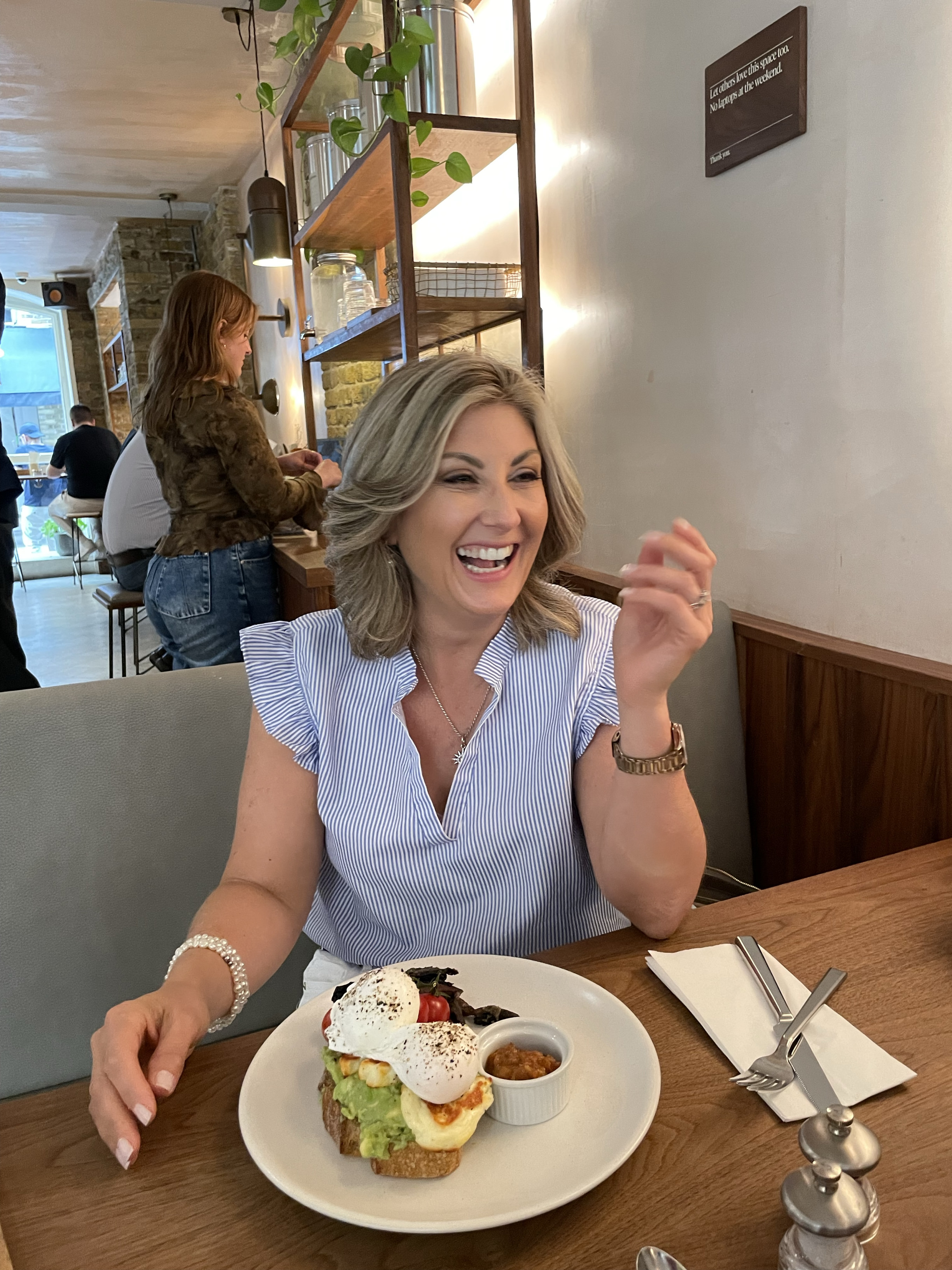
Denise Stegall is the founder of Healthy Living with Denise and the international best-selling author of Healthy Living, Happy Life. With over 25 years of experience in wellness—and 17 years specifically focused on helping women navigate menopause—Denise blends her expertise in functional nutrition, mindset coaching, and plant-based cooking to help women feel better, think clearer, and show up fully in every area of life.
As the creator of the Midlife Metabolic Flip, she offers a science-backed, personalized approach to addressing the root causes of midlife challenges like weight gain, fatigue, and sleep disruption—without deprivation or overwhelm.
In today’s conversation, Denise shares why menopause is not just a personal issue but a business one—and how supporting women through this transition creates more resilient, productive, and empowered workplaces. Her warm, no-nonsense style helps women and companies alike reframe menopause not as a problem, but as a powerful opportunity for growth, well-being, and performance.
Quick Facts
Author: Healthy Living, Happy Life (International Best-Seller), Healthy Thinking, Happy Life: Master Your Mindset and get $#it Done (Best Seller), The Successful Body ( Collaboration- translated into 26 languages).
Expertise: Functional nutrition, mindset coaching, menopause support
Certifications: Professional plant-based cooking, functional nutrition
Audience: Career-driven women ages 40–65 in all stages of menopause
Signature Program: Midlife Metabolic Flip (nutrition + hormone su…Read More


