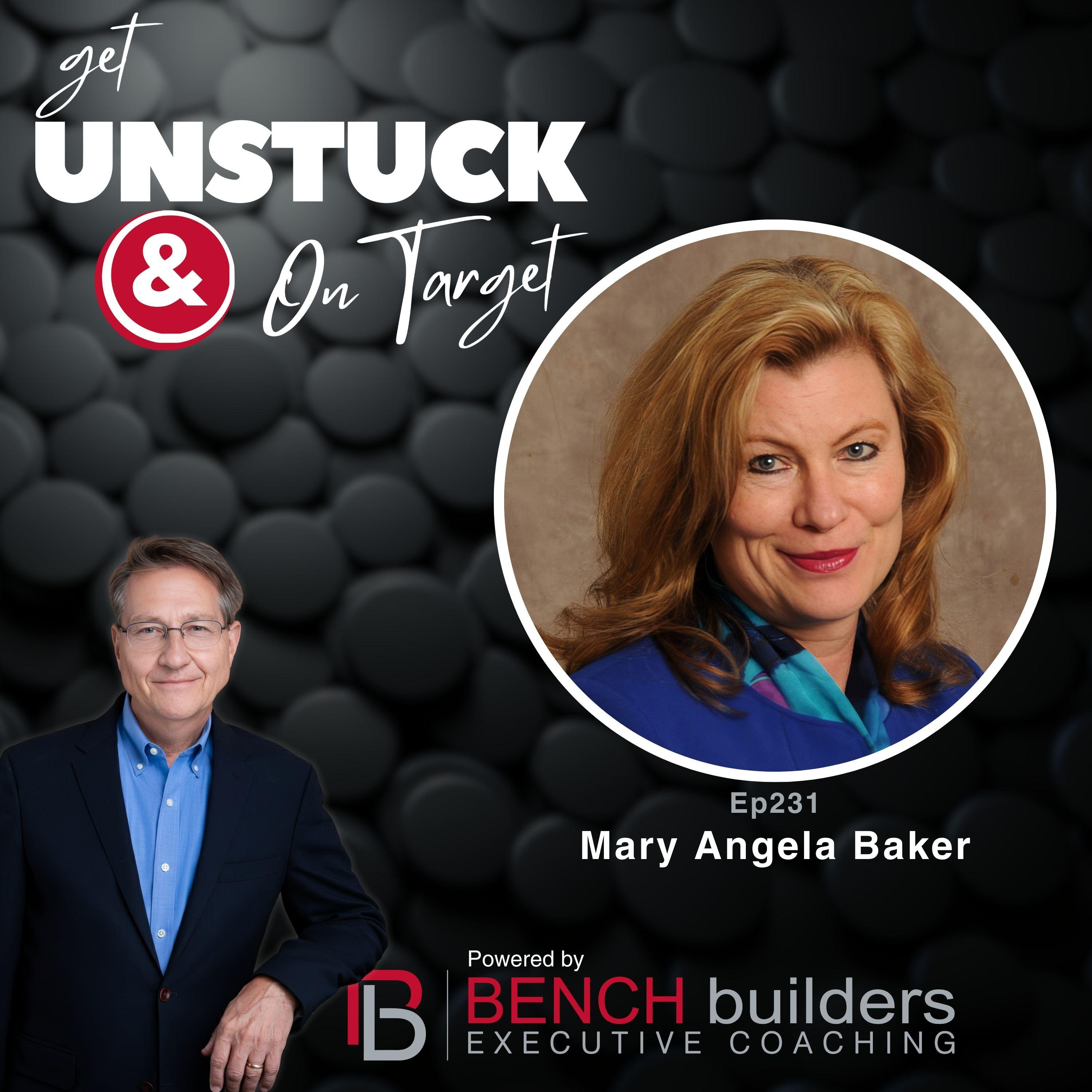
Ep231 Mary Angela Baker - Act Three Leadership: How to Expand Your Network Before You Need It


Schedule a Game Plan Intro Call Here
This 15-minute call is a chance for us to connect briefly and see if a full Game Plan Session is the right next step. No prep required — just bring your goals or questions, and we’ll explore whether a deeper dive makes sense.
______________________________
In this episode, Mike O'Neill sits down with leadership consultant Mary Angela Baker to explore a critical question most leaders ignore: What happens to your network when you enter "Act Three" of your career?
Mary Angela introduces the concept of Act Three—that pivotal stage where leaders have accumulated wisdom and expertise but often find their professional networks shrinking just when they need them most. She walks Mike through a powerful six-step framework (reflect, connect, explore, choose, repack, and act) that helps leaders intentionally plan their next chapter instead of accidentally stumbling into it.
Listeners will learn how to build networks before they need them... why networking isn't transactional when done right... and the surprising reason isolation becomes more dangerous as careers progress. Mary Angela shares real examples from her work with AARP, the International Leadership Association, and her experience helping leaders navigate major career transitions.
Mike and Mary Angela also discuss why the most successful leaders diversify their networks beyond their industries... the one weekly habit that keeps relationships alive... and how taking small actions beats endless planning every time.
Whether you're leading a team today or preparing for what comes next, this episode delivers practical strategies to ensure your network grows stronger—not weaker—as your career evolves.
Mary Angela Baker 0:00
Did is we actually created a program that would help you intentionally walk through that process of, where am I going, what am I doing, what are my values? What's important, what do I want my life to look like in five years, 10 years, 20 years. And as we created the program, we realized that there really isn't one answer, because all of our life experiences really shapes who we are and what are what's important to us?
Mike O'Neill 0:26
Welcome to get unstuck and on target, the weekly podcast that offers senior leaders insights and strategies to not only lead with confidence and vision, but also to achieve groundbreaking results. I'm your host, Mike O'Neal, I coach top level executives on the power of ethical leadership to forge teams to be as united as they are effective in each episode, join me for insightful conversations with leaders, just like you providing practical advice to help you get unstuck and propel you and your company forward. Let's get started. As an executive coach, I know the value of planning your next chapter. That's why I brought Mary Angela Baker onto the show this week. She's a seasoned leadership consultant who introduced me to the term Act Three, that pivotal stage where leaders have a wealth of wisdom but need a strategy to keep their networks vibrant and opportunities alive. In this episode, we dive into how you can intentionally expand your professional network and step into your act three with purpose. Let's get started. My guest today is Mary Angela Baker. She's a leadership consultant and a lifelong learning advocate who's spent her career helping people build connections and open new opportunities at every stage of life. I've asked Mary Angela to join me because too many leaders step into act three without a plan that can mean shrinking networks, missed opportunities and wisdom that never gets shared. She's here to share a better way forward. Welcome Mary Angela,
Mary Angela Baker 2:14
thank you, Mike. I really appreciate being here. You know, I
Mike O'Neill 2:18
wanted to invite you on for a variety of reasons, but one is, you introduced me to the phrase act three to describe a stage of life. What does that mean to you?
Mary Angela Baker 2:29
Sure, Act Three is a phrase that generally people use who are Gen X and baby boomers, and it's a time when you're bringing it all together. So it's Act One, is the beginning of your career. Act Two, as you settle in and maybe think about which direction your career is going. And act three, then is the time when you're looking forward to saying, I have this expertise, I have this knowledge, I have my network. What's next? And so act three really is a time when you're thinking about, how do I take all my skills and talents and just utilize them for the best possible life?
Mike O'Neill 3:09
So in your opinion, why is paying attention to act three such an important shift for leaders to embrace?
Mary Angela Baker 3:20
You know this the phrase, if you don't know where you're going, that's where you wind up. And that actually is so often, we're so busy just managing our day to day that we're not thinking about what's coming. And I actually created a program called Act Three, bringing it all together. And it was designed because a friend and colleague came to me and she said, I am the CEO of my company. I am so busy doing my my day job that I'm not really anticipating where am I going to be in five years. And so what we did is we actually created a program that would help you intentionally walk through that process of, where am I going, what am I doing? What are my values? What's important? What do I want my life to look like in five years, 10 years, 20 years. And as we created the program, we realized that there really isn't one answer, because all of our life experiences really shapes who we are and what are what's important to us.
Mike O'Neill 4:24
You know, one thing that I enjoy in our conversation to prepare for this episode is you married two concepts, and that is how important it is to be intentional. You describe act three as things are kind of coming together, but I'll paraphrase, but if we're not careful, we're out there leading, we're providing guidance to the organization. We're doing everything, but we might lose sight of what's next. And the piece that really caught my attention is that when we get so caught up. Up in the today, we could also lose track of who the people might I need tomorrow. And so when you marry this idea of focusing on act three while also being mindful of expanding your professional networks, that combinations just struck me as powerful. What is it about the two that you think is so important?
Mary Angela Baker 5:28
My background is in leadership development, so I spent a majority of my career at a women's college as the director of the Leadership Institute. So we created professional development programs with our niche being women in the Minneapolis, St Paul metro area. And through that work, you really understand how important it is to build your network, so building it before you need it. And that with networks, what's what I find is so interesting is your network is always changing. So when you're 20 years old, you have the network that is that often, is your college colleagues. You know, the friends that you had in college, the people you had in class. And then in your 30s, your network starts to change. And I actually created a program for emerging leaders because of that. You know, you're now in a new stage of your life, or in your 30s, you may not have as much contact with your college friends. You're now in a new career, but as you go through your different life stages, your network changes, and in order for you to stay what I call a healthy professional network, is you need to be actively thinking about who is in my network. Who am I meeting, who am I connecting with and so as you're looking into Act Three, it's the same thing you might have colleagues that are dear, dear friends, that help connect you to people, and then they retire. And so all of a sudden, they're not in your inner circle, but they're in your, you know, outer circle, and not quite as making those connections that you might need.
Mike O'Neill 7:01
You know, when people hear the term network or networking, all too often, it gets kind of put in a box. It's what you do when you're trying to generate business, or what you do when you're trying to find the next job. That's not how you're defining networking, is it?
Mary Angela Baker 7:20
No, and I think of networking is, who do I know in my circle, and how can I help them? So one of the most important things for me when I think about who is in my network is, how can I pay it forward? And if you, if you look at it from that point of view, instead of what's in it for me, but how can I help others, then that makes you a multiplier, and that helps you to again, expand your network, because when you're helping others, they see that, and they, in turn, will help others, and they they will help you in the long term,
Mike O'Neill 7:55
I suspect we're going to toggle back and forth in this conversation. Let's go back to act three for a moment. And that is, I may have oversimplified the concept, but one of my thoughts that popped in my head was intentionality. And that is, don't get mired down in what you're doing, but be intentional to kind of where you would like to go on that. For you're an expert on this. For those who are listening, leaders that are listening, and they say that might describe me, walk us through the kinds of things that we should be mindful of.
Mary Angela Baker 8:37
Okay, I'm actually going to use a model that was created by Richard leider and Richard Leiter. Worked with AARP, the national office, and created this model, or use this model, for a program called Life reimagined. And life reimagined. I was introduced to it through AARP Minnesota, when I lived in Minnesota and and then actually was able to meet Richard because he's lives in the metro area. So life reimagine has six components, reflect, connect, explore, choose, repack and act. So these six components are the model to use as you intentionally move forward. And what's really great about this model is that it's not you don't go in sequence. It's where you are and what you need. So you can go from reflect to explore, to repack, to choose, and back to reflect and back and forth. But this model is really nice because it's action oriented. So the reflecting, you know, you often think of just sitting in a room and being quiet and reflecting, but it really is doing your homework. The connecting is reaching out to people. So if I'm really interested in moving to. Uh, your area, I would reach out to you and say, Hey, let's connect. And tell me. Tell me what you know, what's it like to live there? Explore is that same thing. So you say, Well, this is what it was like to live here. And here's some organizations you might be involved with. So that's the Explore part, where I could research that further. Often, we have so many options that you need to then choose, and that's why I like this model that you bring it down to, what do I want to do? What are my first steps? Repack is where I bring in the transformation trilogy. But what am I keeping? What am I letting go of? What am I adding on? And then my favorite part of this whole model, so when, as you think about what's next, and you've done all your homework and you've talked to people, but the one part that makes it, to me, the most powerful is the component of acting. It's taking that step. Because so often we, you know, we talk about that you're unstuck. You know how to get unstuck. The unstuck is just taking one small step. And so when I used to teach this model, I would say to the people in the class, you showed up, that is an action just by coming here. So the action doesn't have to be a oh my god, I'm going to move to Georgia. The action can just be I showed up and took this class, and now I'm learning more, and I'm meeting the people that are also in this class, so I'm connecting, and I'm exploring new options. I jotted these down. You're really, really excited about this.
Mike O'Neill 11:36
Well, I can see why, because as I'm listening to you describe it, it makes sense. What really kind of caught my attention is it's not a defined sequence and people approach that of the six steps that you just outline in your experience, which one do leaders struggle with? Most?
Mary Angela Baker 12:02
Um, I don't think there's one easy answer, because it all just, it all depends where you are. So I and so I would say maybe it the hardest one is the acting. And so the the act to reflect, the act to connect that. So it's taking that first step. So if you're stuck and you just it's trying to do that one first thing to start moving forward, and that's why I do like this, is that it's, it's action oriented, as I said,
Mike O'Neill 12:33
All right, as you were listing those, I wrote them down, and then I wrote them down in in red ink. But just so I could remember it, I grabbed my highlighter just as you were talking. Guess what? When I highlight, when did you it was, it was act. And not only because you said this is your favorite, but what I like about this is the fact that it takes action. And in large part, when you add that concept, you take an action, and sometimes it's getting started, so act three, and what you're offering us is a kind of a way of looking at it in these, these six steps, not necessarily sequential. Of those, you felt that, though there's not one that proves the biggest stumbling block, but taking action to reflect, to connect, to explore. You said you'd like that. What is it about taking action that resonates with you?
Mary Angela Baker 13:34
So because, I think, in my experience and is that when? And I'll just say it personally, so when I when I am stuck, when I am just not knowing what to do, and getting depressed and getting sad, and what gets me out of that is to take to do something. And so the something in the beauty of how our you know, our post covid Life is, we're now on Zoom. And so doing something doesn't have to be immediately in your area. You can be reaching out across the United States, across the world. So by doing something to expand where you are. I'm involved in the international leadership Association, and I serve on the community of the women's community in a leadership role, and we have members from all around the world. And so that is me connecting and hearing advice experience of colleagues in leadership all around the United States. So that small action of acting, even though I'm sitting in my home in Maryland, is helping me expand outside of my world. Now.
Mike O'Neill 14:49
Mary Angel, you may not know, but this podcast has been downloaded in 60 plus countries, so when it's finished, just know that that could be a vehicle to help. Get word out about what is
Mary Angela Baker 15:01
it your international leadership Association? Oh, very, very cool.
Mike O'Neill 15:06
I said we may be toggling back and forth, but we were kind of talking about the intentionality of Act Three, and that if you're going to act that would include that connection phase, which I'm kind of liking to networking. What is it about networking that feels so transactional, and if it if people kind of get that icky feel, how would you encourage us as leaders to go about doing this in a way that builds some depth, actually?
Mary Angela Baker 15:43
Have, there's a wonderful article that is 20 plus years old in the Harvard Business Review, and they talk about the power of networking. And in this article, they talk about three key points. So I told you had my notes that I wanted to make sure I did it right, but you want to forge better connections through the power of shared activities. Forge better connections by diversifying your network, and forge better connections by identifying the multipliers in your network. And so I think as we're thinking about expanding our network, again, it's being very intentional, but doing things that you enjoy and you love. So through the power of shared activities, my question to you might be, what boards are you serving on? Where are you volunteering? Where are you you know, how are you getting involved? And so when I moved to Maryland, I had no local connections, but I'm now active in the local United Way. I served on the Executive Council of AARP Maryland. I am involved in the international leadership Association, and I'm involved with my professional association, which is called upsia, which is a long Ackerman for a continuing education and professional development association. So making these connections through my associations, through, you know, things already established, was a way for me to expand my network here in Maryland. And then through that eight degrees of separation, I met you,
Mike O'Neill 17:21
we have and I'm trying to remember the first time we had a conversation, but people may not realize between the time that you and I first talk and we even record the episode, it could be weeks or longer, and there's a lag oftentimes between recording the episode and it actually being published. So I'm happy to say that our relationship started weeks, if not months, back. But what that has done for me, it's given me a chance to kind of watch your post, learn more about you in the process, and you have introduced me and now introducing our listeners to some new ideas here, as you step back and you begin reflecting on just the the depth and breadth of what we're trying to talk about in a short conversation, what might be the kinds of things do you want to make sure that our listeners truly capture?
Mary Angela Baker 18:22
As I think about the expanding your network is that it's something that you you want to be aware of, and you don't have to work on it daily, but you should be very conscious that you're working on it and that you're and and when I say working on it, what I mean is being out there, being connected to people, staying in touch with people. There's a lovely philosophy that once a week you should send a either a LinkedIn message or a email or a note to someone that you haven't seen for a while, just to stay connected and to be so it is a very active. You know, expanding your network is a very active. I also think it's important to think that there's so many ways to, you know, when you think about, Well, how am I going to meet people? So I just listed off some formal things. You know, associations, United Way. You know, organizations, nonprofits. But you can also expand your network by when you're you're at a basketball game for your child's you know, and you're watching your child play a sport. Are you talking to the person next to them and getting to know them, and getting to know you know who they are? And my favorite example is that my brother in law was at his son's basketball game, and a text came in from one of my siblings that said something about Best Buy company, you know, blah, blah, blah about Best Buy. And my brother in law responded, Well, I'm sitting next to the CEO of Best Buy. I just asked him, and this is what's really going on. Wow, it just happened that, you know, this came. In, but that's, you know, when you think about it, who you? Who are you? Meeting the parents of your children, who are? They're part of your network, and so going, you know, and taking again, taking the action, having conversations with the people, asking them what they do, and learning more about them.
Mike O'Neill 20:18
You know, as I was thinking about people who may be in Act Three, it seems as if, all too often, the quote networks that one is in, many times, revolve around the profession. It might be the industry that you're in, but as good as that might be, it can be constraining, because it could very well be you are not getting perspective. And I think what I'm hearing you say is the intentionality to maybe get out of your comfort zone, to reach out. But it could be as simple as a conversation at a basketball game that who knows, not only did you make introduction, but you get a chance to say, Guess who, guess who I'm sitting next to.
Mary Angela Baker 21:05
And you know, we all have stories of friends and colleagues that work for corporations. And I remember cargo, one of the largest corporations, largest companies in the world, had a downsizing, and they actually eliminated 1200 positions from one in one area. And so my friends, if their entire network was inside cargo, all of a sudden they all are gone. And it happened with target. Targeted a massive downsizing. 3m has done a massive, long downsizing. And so when you think about your network and who you're connecting with, it's important, yes, to have your internal colleagues, your internal circle of influence, but then also be thinking, Who is it outside of the company that I can connect connect with, and that's where, when you think about serving on boards, why that becomes important, because you're being exposed to people from different organizations, different backgrounds. When you think about even, you know, are you part of the book club from your independent bookstore? And you so you're meeting people in your neighborhood so different ways that you can reach out.
Mike O'Neill 22:19
You know, the nature of this podcast. At some point, I'm going to ask you to share an example where, perhaps, where you got stuck, and if you would share and maybe most importantly, what, what really helped you when you got stuck, move forward. Sure.
Mary Angela Baker 22:38
So, speaking of downsizing, in the department I was in, we had a major downsize and and many of the professional development programs we offer were no longer had the capacity to offer. And we also said we this is a good time to think about, what else can we do? Took action, which is writing a grant, received funding that we're able to bring in, then a build a team that the purpose of the team was to create a new program. And so through this small team, we designed an emerging leadership program that, once the program was established, then through the network. So my team introduced me to other people who introduced me to other people, and we actually then were able to create what became the signature program for emerging leaders, for women in the Twin Cities area. And not only was it, we had what we call just the general one, but we also then created a leadership program for women of color. We created a leadership program for police officers, women police officers, which was absolutely fascinating, because our lead instructor was a retired Chief of Police, and she then again, it was the same thing. She brought in her circle, and we met people through her. So I think when you talk about getting unstuck. It really is, again, making connections, reaching out, thinking creatively, being curious. And keeps going back to that taking action. Because when we get stuck and you sit, you know we've and we've all been there, and it's so hard to take that first step.
Mike O'Neill 24:22
You know, the example you just gave, I mean, it's it came out of a significant downsizing, which has so much emotion tied to that you were left with this kind of a skeleton team you and, I think, in one other, if I remember correctly, and but what you did is you use this opportunity to reimagine, and in reimagining, y'all created kind of a nucleus to build on that applied in multiple ways. You know, as we begin our wrap up here, Mary Angelo, what might be something. Things that you would like to share with us that we've not had a chance to cover.
Mary Angela Baker 25:09
I think the most important you know, as I mentioned, I've done a lot of work with AARP, which I find is just one of my favorite place, go to places for resources, and you all the research that they do is, to me, just feels really, really solid. But when they talk about, you know, as you're looking at act three, and as you're moving forward, really, the whole thing, you know, obviously we know that we should be being a holistic person, so we think about, you know, you're exercising, taking care of your health, relieving your stress, but what they really push because isolation is fatal, and that's actually one of the messages that Richard leider, who wrote the book Life reimagine that was one of his key things, is that it's so important to keep stimulating your brain and staying socially connected. And thanks to zoom, it doesn't have to just be in your neighborhood. You can you can be really reaching out across across the world.
Mike O'Neill 26:14
Well, with that in mind, what might be one simple step that our listeners could take this week to start building or expanding their network with purpose.
Mary Angela Baker 26:31
You know what I'm gonna say? Because I am a lifelong learning so I'm gonna say, take a class. Oh, good. Take their your go to your university Continuing Education Department. If you look at the University of Minnesota continuing education, they have everything from professional development to programs for seniors, so there's a wide variety. But take a class, either take it online and take a class that it's not where you're just by yourself doing a self paced module, but take a class where you're actually being with people, having conversations low risk. It's something you're passionate about, just something that to be meeting new people. And it goes back to that shared passions. When you talk about expanding your network through shared passions, I
Mike O'Neill 27:20
think it's a great suggestion. Mary Angela, I appreciate you sharing not just ideas, but these ideas. Are all practical ideas. What's the best way for people to connect with you, to learn more about you and kind of work you do?
Mary Angela Baker 27:38
I would say LinkedIn. So as you can see, my full name, Mary Angela Baker, and I'm on LinkedIn, and it has, you know, my information there to reach out.
Mike O'Neill 27:50
We're going to send you a message. We'll include your LinkedIn profile on that, and that way, if people want to say, I would like to link up with her, that will make it easy for you. You'll just look on the show notes for that. Thank you so much for sharing your expertise.
Mary Angela Baker 28:06
Thank you. I really appreciate it
Mike O'Neill 28:09
for our listeners. If what Mary Angela shared today resonated with you, I am going to encourage you to connect with her directly. You will find that link in the show notes. And if today's episode kind of got you thinking about your own leadership, maybe the clarity that you bring to your team, the culture that you're shaping, or the challenges that you're carrying as you grow. I love to help you think it through. I offer complimentary game plan sessions by invitation only. There's no pressure, just clarity and a practical next step. So if you or someone you know, could benefit from a game plan session, you'll find a link in the show notes. I appreciate you all joining, and I hope to everyone listening that you have found ways to help you get unstuck and on target. Thank you for joining us for this episode of get unstuck and on target. I hope you've gained insights to help you lead with confidence and drive your organization forward. Remember, at bench builders, we're committed to your success, your leadership excellence and your strategic growth. If you've enjoyed our conversation today, please leave a review, rate and subscribe to keep up with our latest episodes. This show really grows when listeners like you share it with others. Who do you know, who needs to hear what we talked about today? Until next time, I encourage you to stay focused on the target and continue to break new ground on your leadership path.
Speaker 1 29:52
This show is powered by media leads to get your next great podcast produced. Go to media leads co.com,
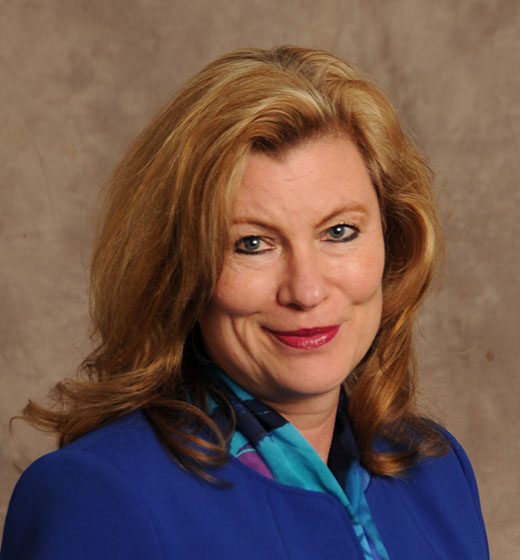
Principal Consultant
Mary Angela Baker, MA, is principal consultant at Firm Fortitude, a consulting and learning center focusing on professional development and the 60-year-lifelong learning curriculum. She has an extensive career in leadership development, continuing education, outreach and community engagement. As founding director of the Center for Extended and Lifelong Learning at Salisbury University, she was responsible for creating educational programs for learners of all ages. Before moving to Maryland, Mary Angela was the director of the Leadership Institute at St. Catherine University. Located in St. Paul, Minnesota, “St. Kate’s” is one of the largest women’s colleges in the United States. Baker is active in several leadership initiatives, including founding leadership team member of the University of Minnesota’s Carlson Women Global Connect, founding member of the United Way of the Eastern Shore’s Women United, and executive council member of the International Leadership Association’s women’s affinity council. With husband, Jack, and border collie, Willa, she spends her free time at Assateague Island National Seashore. A life-long learner, she has a master's degree in Organizational Leadership from St. Catherine University, a bachelor of science degree in Business Administration from the University of Minnesota; she is an alumni of Leadership Maryland and a Leadership Fellow at the University of Minnesota.


