Ep232 John Wichmann—How to Save Hybrid Work: Design Your Model for Maximum Productivity and Culture





Schedule a Game Plan Intro Call Here
This 15-minute call is a chance for us to connect briefly and see if a full Game Plan Session is the right next step. No prep required — just bring your goals or questions, and we’ll explore whether a deeper dive makes sense.
______________________________
In this episode, Mike O'Neill sits down with John Wichmann, founder and CEO of Gather Sciences, to tackle one of the most frustrating leadership challenges of the decade—hybrid work that just doesn't work.
Leaders will learn how to transform their broken hybrid models from constant policy battles into strategic advantages that boost both productivity and culture. John reveals the framework he uses to help companies move beyond arbitrary return-to-office mandates and instead build purpose-driven hybrid systems rooted in intentionality, consistency, and accountability.
Mike and John break down how to create meaningful connection in hybrid environments, what metrics actually matter when measuring hybrid success, and how to communicate changes without triggering resentment. They also discuss the biggest misconceptions leaders have about hybrid work—from both the executive and employee perspectives—and how to bridge that gap with clarity and trust.
Listeners will discover how to assess their current hybrid approach, identify where it's failing, and take immediate steps to redesign it around what actually drives results. Whether you're scaling a team, onboarding new talent, or trying to save a culture that feels like it's slipping away, this conversation offers practical, actionable strategies to get unstuck and move forward with confidence.
By the end of this episode, you'll know exactly how to turn hybrid work from a compromise into a competitive edge.
John Wichmann 0:00
Why are we coming together? What is the practical reason for it? How much do we need to do that? So it's really about creating those meaningful interactions, creating meaningful connection in the workplace or at a client site, or we work somewhere, doing that in a very thoughtful, intentional way, and doing it consistently based on the needs of not only that organization, but really the different partners within that organization, which is really where we see a lot of the the differences surface.
Mike O'Neill 0:29
Welcome to get unstuck in on target, the weekly podcast that offers senior leaders insights and strategies to not only lead with confidence and vision, but also to achieve groundbreaking results. I'm your host, Mike O'Neal. I coach top level executives on the power of ethical leadership to forge teams to be as united as they are effective in each episode, join me for insightful conversations with leaders just like you, providing practical advice to help you get unstuck and propel you and your company forward. Let's get started. Hybrid work isn't the enemy. Poor design is every week in coaching sessions, I hear the same signals. We're busy but not productive. Our culture feels thin and no one agrees on when to be together. If that sounds familiar, this episode will help. We're going to unpack a practical way to turn hybrid work from a policy fight into a performance system, one that aligns purpose cadence and accountability, so your team knows why they're together and what gets done when they are expect real talk about metrics, communication missteps and the small shifts that build lasting momentum. If you're ready to stop tweaking your hybrid policies and start designing results. You're in the right place. My guest today is John Wickman. He's the founder and CEO of gather sciences. John's on a mission to save hybrid work, and after coaching dozens of executives through this challenge, I know firsthand how much leaders need what he's offering. But here's what I've been hearing our hybrid model, it feels broken, or my team's disconnected, or we're busy but not productive. If that sounds familiar, you're going to enjoy listening and learning from John. He's helping leaders design hybrid models that boost productivity, strengthen culture and turns this challenge into a competitive advantage. Welcome John,
John Wichmann 2:51
thanks, Mike. It's great to talk with you today, and thanks for having me on.
Mike O'Neill 2:56
You know, we were talking about what might be the best topic that we would zero in on and I want us to jump right in. The name of this episode would be saving hybrid work how to turn your hybrid model into a strategic advantage. When you shared with me in our first conversation that you want to save hybrid most of the leaders I kind of coach. They're exhausted by hybrid. They're constantly tweaking the policies that never quite work. So what patterns are you seeing that kind of made you say, Enough, let's fix this and fix it now.
John Wichmann 3:38
Yeah, that's a great question, Mike, and it honestly started, it's probably really why we started, why I founded gather sciences, and it was an experience I had. Think that was a real eye opener, where I was working with a large company out in the Midwest, and you know, you had on one side, the CIO, who is just petrified of asking people to come in, because it was during this great resignation period, if you can think back, remember those crazy days, and no, no, we can't ask anybody to come in. They'll leave us. You know how hard it is to get a full stack developer. And okay, got it, got it. And then I went and talked to a frontline manager, and I said, Hey, let me ask you a question, if you had your folks come in two, maybe three days a week, and you all came in together and really were thoughtful about what you did? So would everybody quit on you? Would your team leave? He said, No, I wouldn't leave. He goes, the only reason they don't come in is because when they come in, nobody else is here, and they're like, what's the point? And I think, in a nutshell, that sort of really nets it out. It's very much was has been, in many cases, sort of an evolved model, and one very much based on power and leverage of, hey, what's the prevailing hiring, hiring conditions, and if, if, if it's if it's a tough job market. We'll just sort of force people back in. And if it's, if it's tough to find that labor, well we'll just be more flexible, which we always thought. I always thought that would be a terrible way. And it certainly isn't a long it does not give you a long term solution. It's very much based on market conditions versus a purpose based approach.
Mike O'Neill 5:21
Now you introduced me to the notion of a kind of a balanced hybrid framework, and as I've read about it, it emphasizes intentionality, consistency and accountability, and those aren't words you typically associate with flexible work, how do you help leaders balance that flexibility with the structure that teams actually need to thrive?
John Wichmann 5:50
Yeah, another great question. It really, you know, that frame our framework is really designed around what we think are those core ingredients, you know, bringing together the right people, the right time and frequency into a inviting, impactful office environment, and then really to do the things that matter most. And as you said, that's really got to be built on a foundation of visibility and accountability. And so we find that really companies focusing on a a purpose based approach and B creating that common why that both executives and and you know, the last individual contributor you just hired right out of school can all really agree on, which is, Hey, why are we coming together? What is the practical reason for it? And then, how much do we need to do that? So it's really about creating those meaningful interactions, or creating meaningful connection in the workplace or at a client site or at a you know, we work somewhere, whatever that might be, but doing that in a very thoughtful, intentional way, and doing it consistently based on the needs of not only that organization, but really the different departments within that organization, which is really where we see a lot of the the differences surface.
Mike O'Neill 7:06
You know, John, this is an unscripted conversation. You don't know what the questions are going to be more often, not I don't know the questions I'm going to ask basically, kind of feed on what you've just said. But I'm sitting here thinking, all right, I'm a business leader. I'm in a role where I've struggled with hybrid in practical terms, rather than use frameworks and all those fancy terms. What does engaging with gather sciences? What does that look like?
John Wichmann 7:37
Yeah, I think it really looks like getting insights, and US surfacing information and ways of looking at things that you maybe you weren't aware of, hadn't thought of, didn't even know were possible. Often we're working with companies who feel like there's just a binary choice. It's sort of live with broken hybrid, or it's okay kind of hybrid remote models, or getting rid of them entirely and pulling everybody back into the office, which many haven't done that because, not because they don't want to, but they feel the cost is too high over there. And so our our point is, hey, there's another way. It's around purpose and intentionality, and it can be a long term solution for you. And so that's kind of part of it. And then, you know, we do, we do. There's but there's companies who are doing a pretty good job of it, and for those, we're really trying to help highlight those efforts and give them credit for that. And that's really where we created a certification around it, just, you know, to help them differentiate themselves against those companies that maybe are about to throw hybrid out, or really have not been able to get their arms around it.
Mike O'Neill 8:47
Yeah, I was intrigued when you shared with me that very thing, the certification. And let me see if I understand correctly, you work with an organization, they learn kind of what is the framework we're talking about the methodology they they embrace. What is it that this brings to them from an organization standpoint, but they embrace it so well that they actually can earn a designation. And if I understand correctly, that designation, you use the words differentiator. It means when a prospective applicant, prospective employee, is checking out this organization, if they see that they are certified, they may not know exactly what that means, but they sense this company's trying, and they're taking this seriously.
John Wichmann 9:40
Yeah, 100% and it's called Balance hybrid certified. And really it's what you said. It is. It's a signal out to the market in a different conversation, to say, hey, lots of companies are going to tell you they're hybrid and but that not all hybrid is created the same. And what we've done is we've gone through this. Certification process, which means we're really thinking about hybrid remote work in a thoughtful, intentional, purpose driven way. And if they're talking to, say, somebody at a college recruiting table for them, the benefit is, hey. So we've really designed this around being able to progress your career path forward, and doing it in such a way where we thought about, how does togetherness with those who are more experienced than you impact right your growth and success in our organization? Because the real risk for those younger folks is they do come in, whether the company says, Well, you got to come in two days, three days, four days or five days, if they're not going to be around people who can teach and, you know, show them the ropes, not only of how that company works, but also of the trade, whatever function, you know, whatever expertise they're working to gain, it can just be very, very difficult to really feel like you're a part of it, to feel like you're growing and learning the way you otherwise could. And so that's a big part of it. And and, you know, for the experience hire, it gives them a signal to say, Hey, this is a company who's thoughtful and intentional about hybrid and remote work and and I don't have to have that heightened concern that 60 days after I join they're going to pull the rug out from under me and say, no, no, no, we're going back full time together. Is better, you know, or something like that. And they're like, Hey, that's not what I signed up for. Well, sorry, too bad. And so we think in both ways, it helps those, those types of conversations.
Mike O'Neill 11:29
I hope my HR friends won't take offense by what I'm about to say, but what we're describing here is not necessarily a touchy feely approach. I know that you mentor in the tech community, so metrics matter a lot. You've developed good data to show that the ROI on what we're talking about. It's significant. What specific kind of data should leaders track to know if what they're doing, from a hybrid standpoint, is working or perhaps even holding them back. Yeah.
John Wichmann 12:07
So there's certainly metrics they're already looking at that can help give signals and that can really be used as benchmarks. So one of those is employee engagement, right? Oftentimes, you know when they're trying to even if it's three days a week, but shoehorn people into something that they don't feel is worthwhile their time driving into the office three days a week. We've certainly seen cases, and I think it's a clear indicator, right when your employee engagement drops and you start to see in those comments that come in your employee engagement or pulse surveys that most to all companies are probably doing. You'll, you can see a dip in that. And lots of times there's indications, clear indications, that forcing people to come into an office when they don't see the value in doing so will definitely drive those numbers down. The other is any other types of either productivity metrics, you know, we work with, you know, accounting, CPA firms, law firms, oftentimes. And one of the indicators they have seen is that, hey, this was in particular, I think, a conversation I had about an audit practice, right? And they had seen during that, you know, through that sort of covid period in those five years is that the number of hours they're having to put in to execute and completely fix the audit had gone up. 25% the work hadn't gone up. Nothing else had changed. And there's a client that had been doing work for for, you know, a long time. But what had happened was two things. One, the learning had slowed right those new people coming into the firm, they're at a year they're at a year and a half that they're functioning like a six to nine month person, so they were probably 30 to 40% slower learners, and getting up to speed and being productive on billable client work. The other was, it sort of created this environment where there wasn't this coordination. And it was described by the managing partners. Everybody was working down a level. So I had managers who were, you know, doing the work of senior associates, senior associates, doing the work of associates. And that was just because that that cohesion, that continuity of communication, was disrupted, right? Because it was, well, people were kind of working late and then early, and then we weren't together, and they were busy on something else. And so it got very broken apart. And so instead of doing that teaching a moment, people would just do it themselves. So productivity certainly focus. And we talk about momentum versus productivity a lot, Mike, because people can be working. It's not always. Somebody's just mowing the lawn at home, right? Or or, you know, doing chores or something. Oftentimes it's people not being focused on what's most important for the business at the time, and the lack of proximity can, can, can foster that. And. Environment. So it's not always people trying to cheat the system or trying to get away with something. Oftentimes they're working but not working on the right thing. And so that's why that intentionality around togetherness within a hybrid or remote environment, we think is so important in doing those things that are going to matter, so that when you are apart, right, the work is just as valuable as when you're together. It might be different kinds of work, but just as valuable
Mike O'Neill 15:31
John business leaders have been wrestling with this, particularly since covid What is, in your opinion, what is the biggest misnomer that you would like to kind of debunk about this idea of how to do hybrid work, right?
John Wichmann 15:53
Yeah, there's a couple. The one I'd probably pick is that executive your classic is, well, the executives only want are only telling us to come back to the office because they're upset about empty seats, or, you know, they they don't trust us, or they're mad about, you know, something like that. And I would just say that on that side of the equation, there's real issues, right? There are real issues with a lack of high value connection that are causing, again, real issues within the core metrics of the business. Again, profitability, efficiencies, ability for new people to learn and come up to speed and be effective within that organization, attrition. There's absolutely real stuff happening when a hybrid model is is not optimized, it is not healthy. I'd say on on the other side is really, for employers and for CEOs, is that, hey, there isn't it's not just black and white. It's not as easy as well. We're just going to call everybody back, and everything's going to going to get better, because you're going to just, oftentimes, create oftentimes create resentment. You know, may obviously people, some people will leave, but then you have a high level resentment that then is resident within a decent percentage of your employees when you're forcing them to do something that they genuinely believe is a waste of their time, whether or not that's the case or not, but if they perceive it to be a waste of time, you've got a much bigger problem than than disengagement. You're now in resentment land. So you've got to move from resentment to disengagement to engagement. So you got a pretty, a pretty big challenge ahead of you when you pull off something like that. So we again. We think that there's a nice middle ground that works for all involved.
Mike O'Neill 17:49
Yeah, I'm intrigued by what you're describing here, John, I may not do a good job of characterizing what you just said correctly, but let me make a stab at this, and that is, when a decision is made, we're going to be returning employees back to the office for whatever it's going to be, what percentage of time, it's not uncommon that that's received with resentment, that that they the employees are assuming the reasons for it, when, in fact, those may not be the reasons. What you are kind of describing to me is a return to work or a change in work arrangements. It's a plan. But what I think I'm hearing you say is the key is how that gets communicated to the employee, and understanding how those employees will probably be initially receiving better information. How far off am I?
John Wichmann 18:58
You're spot on, okay? Gaining that common why, right? Let's get that shared. Why, around why being in the office is important, and moving that away from this conversation of productivity, because it's the other classic is, well, they only want me to come back because they don't trust me. They think I'm more productive in the office, and then I'm not productive at home. Well, of course, that's not true. I'm very productive at home. Can't they see that? And how you know how misguided are they? And that always starts off things bad, right? So to your point, talk talking about, hey, listen, this is why not, not just platitudes. Well, you know, serendipity or water cooler, talk or together is better. I mean, yeah, those are all important and true, but they're not going to hold weight against a 90 minute commute each way, or even a 60 minute commute each way. And so it's bringing the employee into that conversation, which is one of the things we really do with the data collection is, is seeing what they think, right? And then, um. In a very targeted, strategic way of bringing that input into the solution. It doesn't mean we can make everybody happy, but if we go after these core goals of, you know, hybrid and remote work to be long term, sustainable, you know, it can't negatively impact the growth or success of either the organization, or those employees, associates in the organization. So if, in either case, if the employees are being hurt because they're not learning or other things, or if the company can't grow and can't succeed, if either of those two parties are being harmed, we don't think hybrid and remote work will stand the test of time at that organization. It can't, because there's those are two. Those are two non negotiables. You can't you can't stall learning. You can't solve the success, success of the employees. Nor can you stall the growth and success of an organization itself with a policy just won't work.
Mike O'Neill 20:58
One things I like what you're saying, John, is you're you're not offering kind of an off the shelf solution. What I think you described is you're really trying to understand where these employees are and to and where are they on that spectrum of engagement, if you would. And I think what you describe is platitudes go nowhere. It's disingenuous, and it almost means it's dead on arrival. But what I guess, what I'm hearing is keeping close tabs on really what is on the minds and perhaps hearts of employees. Sounds like that really influences this balanced framework that you've introduced us
John Wichmann 21:46
to absolutely because if an employee understands that a their their input was considered, right? And we're not asking employees how many days you want to come in? And that's we don't really think that's the best question to ask employees. So we did really good at asking the right questions and bringing the right data together to help provide, you know, the most helpful answers to how that company and really that department can can move forward. And so you're right. I think getting their voice in it certainly helps. And then when they see that their voice of the voice, and their input of their co workers is reflected in those that plan for that department, it goes over much, much better than simply saying, Well, you know, our plan is our schedule like our you know, a hybrid and remote plan is not, well, we're coming in two days a week, we're coming in three days a week. And so many companies, unfortunately, just because the way this whole thing evolved, think that's the end of it. Well, we just set the schedule. We tell them, This is what we want, and we're done. Well, that's maybe 15% 20% of actually getting it right. And so we're trying to so balance. Hybrid was designed to be a universal framework that would work no matter what a company if they're, if they're mostly remote, all room, you know, it can really fit all of those. But then you have to, as you said, you know, bring together the right information, communicate that right message to employees, to bring them along. But then the executive should know that it's not designed to to leave anything on the table. It's not designed to say, well, we should just accept, you know, these, these, you know, negative indicators in the metrics. We should perform subpar and do hybrid. It's not that at all. You know, your performance should be at or above a full time return, but still within the bound boundaries of of hybrid or remote work, 100% that should be the case.
Mike O'Neill 23:53
You know John, I hear this term culture so often. I'm I'm thinking of a conversation I had recently with an executive, and it went something like this, I can feel our culture. It's it's kind of slipping away as we scale. Now they're growing. That's good, but they're trying to embrace hybrid and while the same time scale and maintain that sense of culture. And I'm going to define the culture as those things that define that organization in a positive way. How do you help companies scale while embracing the right cultural elements and embracing hybrid? Yeah.
John Wichmann 24:39
So more. Great, great point. So first to your point about growth, for sure, if you're growing, you're going to have a much easier time growing if you are embracing in a very strategic way, hybrid remote work. Heard from multiple people. Talk to HR professionals. They say, You know what? When you go for a full time hire, if you're saying full time in the office, just be ready for a much, much smaller pool of candidates, and expect to pay at least 15% more than you would if versus like a hybrid role. So So growth can certainly be stalled by a full time model. And I've talked to several companies where they're full time in office and they go wikis. Can't grow. We've got to find a way to do hybrid where, you know, but we do it in a targeted, strategic way. So So growth in and of itself can be helped by having an effective hybrid remote strategy. Two, it's really about that intentionally. How do we create meaningful Connect? Connections, right people to people in a targeted and consistent way. And so it's really thinking about, well, for our company, for what we're trying to do, really, for this department, what are the elements that are going to ensure that as we grow at the speed we grow? We're still going to support that culture, support that connection among our team members, and then that, of course, fosters into that larger company culture. Some companies are super intentional about this, but oftentimes they've let things go like, well, we don't do an all hands anymore, or we just get together once a year. Well, those can be super effective, right? For bringing people together, for sharing information across departments. And we've seen, you know, those sometimes is one of the recommendations that comes out of information we gather, that people are starving for that kind of, you know, cross company, connection and awareness. And so those can be things that can get surfaced as a part of you know, how do we really create a higher level of connection which will then support culture?
Mike O'Neill 26:46
You know, what I've heard you describe is understand your employee base. Be mindful of that as you communicate the resulting decisions, and we've talked a bit about what's good for one organization might not be for another. You know, in my world, what I kind of step back and look at is you're asking these supervisors and these managers to lead in this environment. And therefore my, I guess my question for you is, how does, or does what you all do for your clients? Do you help train these supervisors, these managers in how to be more effective with a hybrid employee workforce?
John Wichmann 27:40
We do. We're, I mean, we're not, we're not management. We're not doing management training, per se, but what we do is a function of the planning process, is we help them and really workflow them through, thinking through, well, how are we going to execute better as a team? And so part of that is, when do we need to come together, and why do we need to come together, right? And so from from that standpoint, absolutely, it will give them that. And oftentimes, what we've found, it's interesting where, when there's too much flexibility in a policy or program, some managers and just the personality they they will lean towards the thing that was going to be most liked by their team. And it's just sometimes it's a leadership style versus what is best for the team and for what piece of the business they're supporting. And so sometimes we find that having a little bit more structure can be welcomed by those leaders, because they have something to lean against, right? They have something to point to, versus it being a discretionary or so loose it's unofficially discretionary policy. So we do find that that can help them as well. In addition to that more targeted planning of how do we really make our in person time together as high value as possible? Sometimes being an outside advocate for a little bit more structure and helping them to kind of fine tune that policy can really benefit those some managers as well, you know, based on their styles,
Mike O'Neill 29:17
that's a great answer. Thank you. You know you were talking earlier about growth, and we were putting in the context of organizational growth companies are scaling. Let's take a little more personal let's talk about, maybe you for just a moment. John, you know this podcast is about, in part, helping leaders get unstuck, because we've all been there that moment when what worked before suddenly doesn't. Can you share maybe a specific time when you felt truly stuck, maybe in your leadership journey, or otherwise, what was happening and what shifted to kind of help you break through?
John Wichmann 29:55
Yeah, that's a great one. You know, I'd say it's something I really. An example I could bring up Mike is just, we're working in an environment in which it's been very binary. So it's sort of, you know, either we're going to have hybrid, and that's sort of the way it is, and we've been in this for a few years, or or kind of moving over to the full time return. So we're, in part, needing to educate people as we're, you know, wanting, you know, hey, can we help? Because we think we can help a lot of companies. So, so finding the way to communicate and have a good, effective conversation and really kind of educate along the way has been a challenge to try to figure that out, and something that I recently came across, and it was just, it's just wild how it had come to pass, because I really wasn't super familiar with it. But there's a group I had recently became familiar with called a funnel idea group, so big, and they do sales training, sales development training, moment Al is the gentleman who founded that company, wrote the book. He made me familiar with. It give to grow, and it's just, it's a fascinating approach that I think appeals to a lot of people in terms of how to really, you know, they, he, they talk about slowing down to speed up, which is really about, Hey, how can we first think about how we can help and what we can offer, versus trying to just jump to selling people things. And I think it's just such a I mean, it really speaks to, I think, really how you approach things naturally, Mike, in terms of this podcast and putting out such great information, and really wanting to help first, and then those who say, hey, maybe Mike could help me in terms of what we're working through, yeah, with our leadership team and other areas. Then they say, Mike, maybe you can help us with that, right? But it's a it's a genuineness of trying to help first and invest in those relationships in targeted ways. And so I had the real opportunity, opportunity, amazing opportunity, to go through that, through a three day class that they had this this week, actually. And man, it was, I've been through a lot of sales, sales trainings and sales methodologies through my career, and I'd say this is called Grow big training, but just, man, it was some of the most, I'd probably say, the most impactful, most practical and applicable, you know, kind of sales framework training I've been in, and it makes it just so much more, you know, I think achievable for so many more people. They focus a lot on professional services, law firms, accounting firms, where you've got partners who don't view themselves as quote, sales people, but do want to still drive benefit and business to it while helping out, you know, clients and prospects. So anyway, that really helped me change my, I'd say, mindset about how to connect with people and really put that thought around, you know, Hey, first, how can I help? And how can we help? And then, if there's a fit, there's a fit for us to do business together. But let's, let's work on that first so recent example of just really something that was very much helped me change my mindset and my perspective on something.
Mike O'Neill 33:09
I mean, I think it's great example. We try to put emphasis on practicality. You know, John, if a leader is listening right now and they know that hybrid isn't working as well as it should. What might be one practical step that they could take this week to start turning it around?
John Wichmann 33:32
Yeah, one thing would really be just to, I would say, assess things with a mindset of purpose, right? And just to say, Hey, what is the reason we are the way we are, right? And just just really trying to think through that and and to say, hey, is this, are we doing what we're currently doing based on, you know, who we, you know, a leverage based model, or is it just, is it because we think it's what's what's really right? It's that, it's intentionality, to try to do everything with intentionality, and then to ask, Are we just settling for where we are currently, and just waiting for the next economic downturn to pull everybody back? Or is it really the way we want, you know, and you shouldn't overlook the opportunity to improve the current situation, I would say, because there definitely are ways to improve it, and we think the best way is really being thoughtful and intentional about how you're approaching this topic.
Mike O'Neill 34:37
That's great, John, I want to thank you for helping us kind of reframe hybrid work, not as a compromise, but really as a design challenge that leaders can actually solve. What's the best way for people to connect with you or learn more about gather sciences? Yeah.
John Wichmann 34:56
Our website, gathersciences.com Talk a little bit about kind of what we're doing, how we help or connect with me on LinkedIn, or Phil, just drop me an email if somebody wants to chat about it, and see my emails at john@gathersciences.com and would be happy to have a conversation and share what we've learned about what's working in a variety of different situations, and also, what are some of the pitfalls that can arise from certain kind of strategies we we've probably seen, seen it all, and we might be able to shed some light on that for them as they work to navigate and maybe make things things better. Great.
Mike O'Neill 35:38
I do have a kind of a comment to our listeners, and that is if John's insights, if they resonated with you, especially if you're tired of being a constant struggle when it comes to hybrid work, I really encourage you to reach out directly to him. We're going to include his contact information in the show notes. And if this conversation sparks something maybe deeper, especially in your own growth, maybe your own growth is outpacing your own leadership, and that is, the growth of your company is outpacing you personally, and maybe you might need to work on bench strength that actually scales. If that's the case, let's talk. I offer a complimentary game plan session for leaders ready to turn frantic growth into focused growth. It's not a discovery call, it's not a sales pitch, it's a real two hour working session where we're going to dig deep into building the leadership capacity that your growth demands. The link is in the show notes as well, and I'd be honored to help you think it through. So to everyone listening, thank you for showing up and caring about your teams and for doing the hard work of leadership. I hope this episode will help you get unstuck and on target. Thank you for joining us for this episode of get unstuck and on target. I hope you've gained insights to help you lead with confidence and drive your organization forward. Remember, at bench builders, we're committed to your success, your leadership excellence and your strategic growth. If you've enjoyed our conversation today, please leave a review, rate and subscribe to keep up with our latest episode. This show really grows when listeners like you share it with others. Who do you know, who needs to hear what we talked about today? Until next time, I encourage you to stay focused on the target and continue to break new ground on your leadership path.
Speaker 1 37:54
This show is powered by media leads to get your next great podcast produced. Go to media leads co.com
Founder & CEO
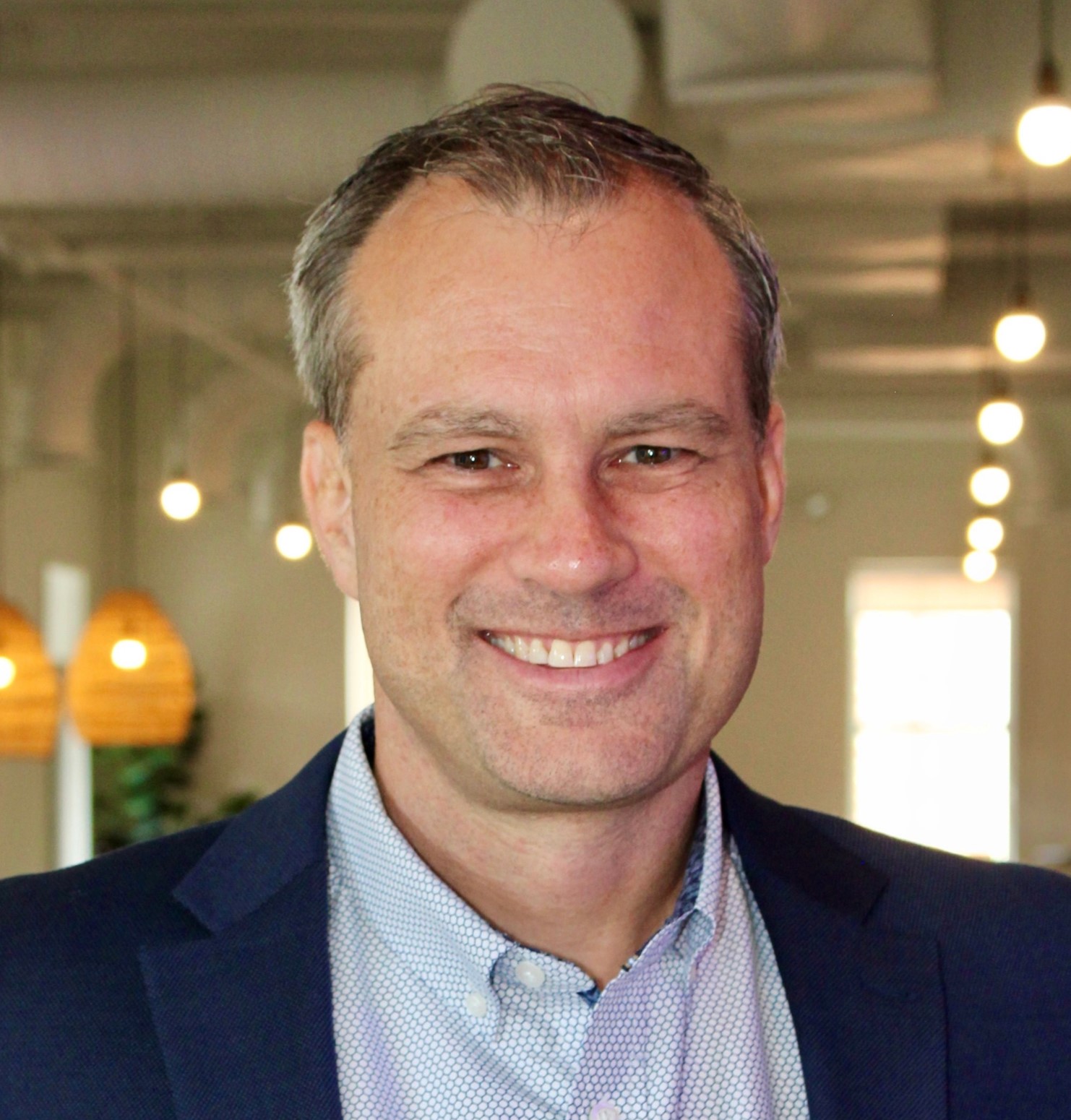
John Wichmann is the Founder and CEO of Gather Sciences, the creator of Balanced Hybrid®, a best practice framework for hybrid work that prioritizes intentionality, consistency, and accountability.
Balanced Hybrid was specifically designed for organizations and their associates to realize the benefits of hybrid work without compromising productivity, growth, or employee development.
John is a vocal advocate for data-driven hybrid work strategies, emphasizing their potential for organizational growth, employee well-being, and environmental benefits. He frequently speaks on these topics and how to unlock new areas of ROI with an optimized hybrid model.
John resides in Atlanta, is an investor and mentor within the tech community, and serves as President of the Board for Technology Executives Roundtable.





