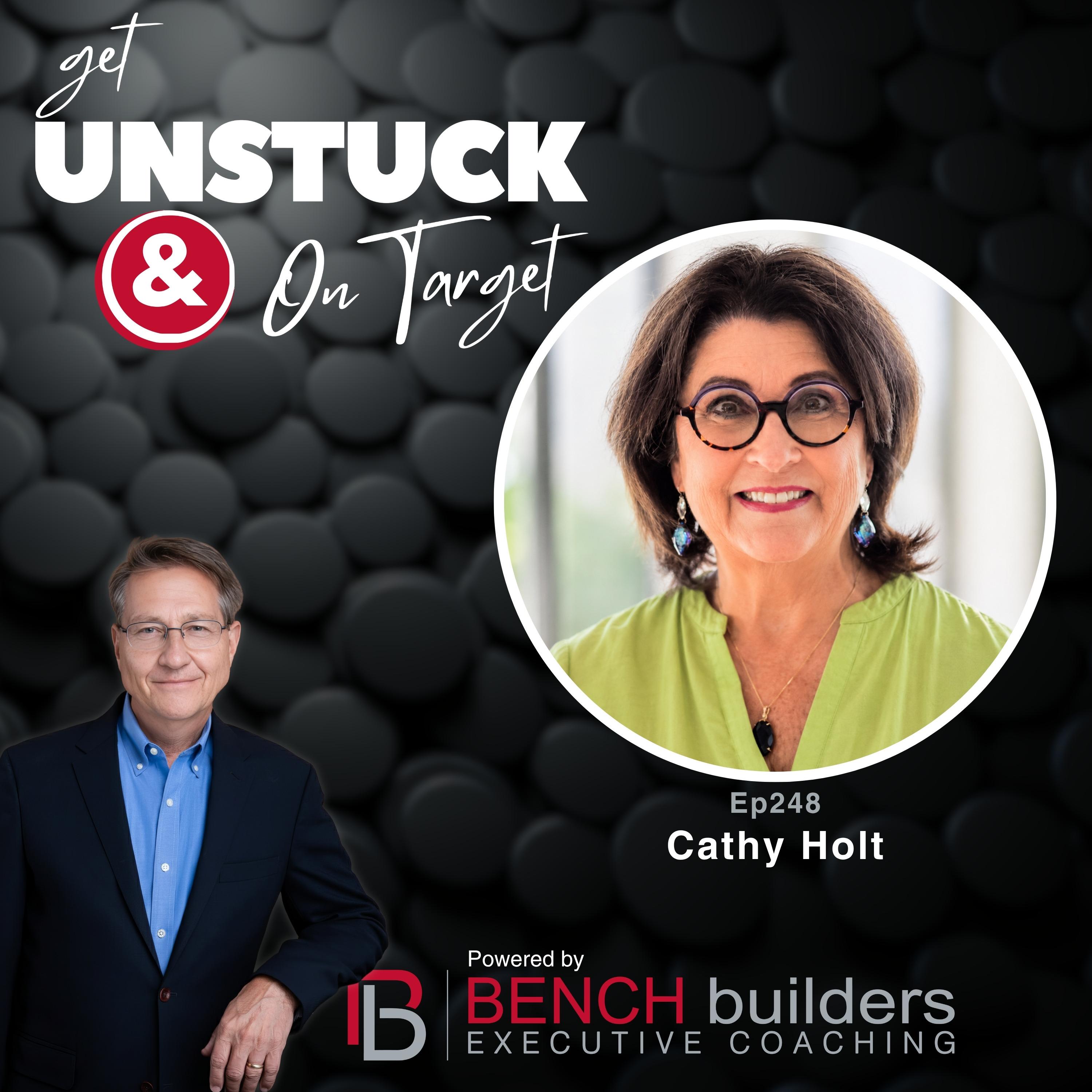
Ep248 Cathy Holt—Close the Recognition Gap and Keep Your Top Talent
Schedule a Game Plan Intro Call Here
This 15-minute call is a chance for us to connect briefly and see if a full Game Plan Session is the right next step. No prep required — just bring your goals or questions, and we’ll explore whether a deeper dive makes sense.
______________________________
Good people keep walking out the door, and most leaders can't say why.
In this episode of Get Unstuck & On Target, host Mike O'Neill sits down with Cathy Holt, a women's influence strategist and author of Unstoppable Women who has spent 40 years in political campaigns, boardrooms, and the United Nations.
Cathy explains why capable women stall out and leave, tracing it to a recognition gap in how organizations see them. She puts the cost of replacing a leader at about two times that leader's salary. Mike digs into the system issues behind it, and Cathy shares what happened to a senior manager who turned a negative department into one producing four times its previous output, then was told to hit $7 million before anyone would consider her for VP.
From there, Cathy walks through her Zone of Greatest Influence framework and what good sponsorship looks like in practice. Mike adds what he has seen in his own work: leaders who champion others see their influence grow because people want to join their teams.
Three key topics to look out for:
- Why capable women stall out when organizations measure them on the wrong things, and what it costs to lose them
- How to move from flashlight to laser beam with the Zone of Greatest Influence so the right people know your strengths
- What good sponsorship looks like in practice: talking about your people when you're in other rooms, and why leaders who champion others see their own influence grow
Cathy Holt 0:00
They're investing a lot of money in these leaders, but they don't necessarily invest in getting to know them. They just kind of say, "Okay, she does that really well. We're just going to let her do that. She's the one everybody depends on, and we'll just keep her there because it's easier.
Mike O'Neill 0:18
Welcome to Get Unstuck and On Target, the weekly podcast that offers senior leaders insights and strategies to not only lead with confidence and vision, but also to achieve groundbreaking results. I'm your host, Mike O'Neill. I coach top-level executives on the power of ethical leadership to forge teams to be as united as they are effective. In each episode, join me for insightful conversations with leaders just like you, providing practical advice to help you get unstuck and propel you and your company forward. Let's get started. Right now, good people, especially women, are walking out the door of companies that never saw it coming, and it's rarely about money. Today's guest has spent decades inside boardrooms figuring out why. Here's her answer: It's not a confidence problem; it's a recognition problem. Somewhere on your team, there's capability that's outgrown the box that you put it in. Every leader listening has got a version of this happening right now. Stick around. Kathy Holt has spent 40 years in rooms that most people never get invited into. Political campaign. boardrooms, even the United Nations, she's a women's influence strategist and author of Unstoppable Women, and she's the host of Holt Talks the Lead. Today, we get into why so many capable, accomplished women stall out not for a lack of skill, but because of a gap between how they're seen and what they're actually capable of, and what does it take to close that gap? Welcome, Kathy.
Cathy Holt 2:15
Thank you so much, Mike. It's just such a pleasure to be here with you.
Mike O'Neill 2:20
Let's just start, if you don't mind, with a theme that perhaps you're seeing everywhere right now, and that is good people walking out the door. You actually call this the great breakup: talented women leaving organizations at record rates. For the leader who's listening right now, who's maybe losing those good people, but they can't explain why. From your perspective, what's going on there?
Cathy Holt 2:46
That and that is something I really do work a lot with. I work with with C the C suite. I work with upper management. I work in organizations and and nonprofits and pretty much everywhere politics. But what I see happening is that there are people in every organization that their influence is smaller than their than their capability, so they're not being used to their maximum potential, and that not only hurts the organization, but it also disenfranchises people, and it tends to happen more with women than it does men. And it's not just the job of the woman to make sure she's recognized, because I kind of call that not-it's not a confidence gap for women; it's more of a a recognition gap, and so if you look at some of the statistics, that for about every one director promotion of a woman, two are walking out the door. That's a that's a tremendous cost to the organization because they're training them, they're investing in them, but they're not staying, and it's not for burnout most of the time. Some of it is, but a lot of it is just not feel feeling like they have the opportunities and access to opportunities for promotions for, you know, better salaries than than they think they're capable of, and they know they're capable of.
Mike O'Neill 4:25
So let's unpack the two things you just mentioned. They're walking out the door, and where are they drawn? Where are they going?
Cathy Holt 4:34
Well, some are becoming entrepreneurs. Others are just going to other companies that or organizations that recognize their brilliance. I have a quick story about a woman I know. Let's call her Jane, but she was in upper management. She was a senior VP. No, she was a senior manager in a corporation, and you know she was a great people person. But her real strengths were strategy, strategic thinking. Yet they pigeonholed her kind of in running several different departments, and because she was really good at it, and their metrics was you know how much she was producing, you know.
Mike O'Neill 5:17
Yeah.
Cathy Holt 5:17
So what happened is they gave her because she was so good at it a department that was underperforming was actually in the negative, and she brought it up within a year to four times what they were producing before that. But when it came to be interviewed for a VP position, they did not honor the fact that she could advance a department that significantly. What they looked at, their measurement was she needed, and they told her you need you need to bring it up to $7 million before we can consider U of E P. They had put her in a position. They had positioned her so that what they wanted from her wasn't what they were using to measure her her strength and what she could bring the company. So that's just that's just one real quick example of how sometimes it's a system issue within the organization that that prevents women from sometimes being seen for their their full capabilities.
Mike O'Neill 6:26
Yeah, I can understand how the system can do just that. Meaning, what they are asking for and what they're measuring may or may not be aligned. And in this case, with Jane, she took it from losing to a significant increase, and the system basically has just said, "Well, the only thing we're really going to look at is not how far you've taken it so far; it's where we need to get before you even being considered. Okay, you mentioned about the cost, and I think when people think of the cost of people leaving, they tend to limit it to yeah. We got to pay for a recruiter to bring someone in. There's so much more that goes into quote the cost of talented people, you know, leaving. Walk us through some of those costs.
Cathy Holt 7:16
Yeah, well, and it's sometimes the very the the line. It's not a line item, but it should be because what statistically it shows that to replace a leader in an organization costs about two times their salary. That's a lot of money, and especially if you look at for every one woman promoted to or walking out the door, you're losing a lot of money that you're not really keeping track of, and that to me that's significant from a from a business perspective, and you know, but it's not always recognized.
Mike O'Neill 7:54
Yeah, I want to come back something you said a moment ago. It may or may not fit with your Jane example, but when a good leader gets passed over, say, for the promotion, or the client, or the credit. At least from my standpoint, oftentimes the default explanation is, well, they lack the skill or they lack the confidence. If you agree with what I just said, why is that the wrong diagnosis?
Cathy Holt 8:21
Well, I will. I will say that part of the equation that I look at and I work with with women is they're not always, they've not really been shown or taught the strategies to position themselves so that everybody knows their strengths, what they're great at, what they can bring to either a company or to their own business, and that happens even with entrepreneurs. That you know they they don't make sure they have to make sure people know that they are the expert and the choice, no matter what, and that's where I said part of the responsibility is also on the person, not just the organization. The organization has to to maybe look at itself and how is how is it giving equal access to opportunities, but also women. Yeah, you're on a soccer field. You don't play by football rules, unless of course you watch the final of the World Cup. They might have gotten confused a little bit on some of their aggression, but you know, women aren't taught that all the time. So they, you know, and it's nurture or nature, whatever you want to call it, but we're often told to be more quiet. Not you know, not brag. You talk to any woman, and when they start talking about self promotion, they have this thing going on in their head. Oh my God, I'm not supposed to brag. Whereas you know, men they talk about their. Accomplishments a lot more freely, so it is partly also the woman's responsibility. But they don't know, so really that's where I come in and I teach them the strategies of working in the environment they're in. What are the what are the norms, and how to strategically position themselves so they become known for what they're really good at, not just what they're doing or busy doing. If that makes sense,
Mike O'Neill 10:31
it makes perfect sense, Kathy. I've gone back. I was reading some of your posts, and you write that you've watched people Often respond to what we're talking about by maybe getting another certification or producing more content or working harder. Why does those efforts not move the needle?
Cathy Holt 10:57
Well, I think we are definitely in an environment right now where people think you need to be certified in everything. I mean, you go online and there's certificates for I don't know, you know, bottle washing. Probably,
Mike O'Neill 11:11
I think you get a certification in certification.
Cathy Holt 11:14
Yeah, exactly. But I think what happens is that we have all of us have strengths, we have passions, we have things that light us up. But what women don't tend to do is to really focus on them. They're so busy with everyday life stuff. Often, I mean, just you know, you look at any study and the unequal balance of work life for women versus men, so that we don't take the time to actually look at what are we good at, what do we really want to be doing, and do that self reflection. And then when you have that, you don't need a certificate to position that you are the expert of your lived experiences, so your perspective is valuable because it's different, and especially in companies and corporations, there all kinds of studies are showing that the more different perspectives you have in the in the decision making room, the better decisions that are being made. So they have what it takes. They don't need certificate certificates or you know more learning. Life has taught them, and they need to what they need to do. And what I help them with is understanding what those strengths are, and then positioning them in such a way that everybody else knows.
Mike O'Neill 12:40
So we've talked a little bit about how that could be done. Let's talk about capable leaders in blind spots, both the individual and the leaders managing them. What are they getting wrong about this perception gap, and how it can be closed? What are those assumptions that really are just way off.
Cathy Holt 13:02
That is a really great, great question, and I think from to to talk about it from the two different sides, you know, I think it's it's fairly easy to to talk about personally our perception gaps because you know that old saying about you know if you're in the fishbowl. You can't see what's going on, you know, necessarily outside or or even what's happening to you. And so, having that separate perspective or somebody else's perspective to help you identify where those those gaps are between what you feel about yourself and what you think you can do and what you really are doing. I mean, so many women I have heard so many times when I say that's exceptional what you're doing, and they go, "Oh no, I just do
Mike O'Neill 13:54
it.
Cathy Holt 13:54
Doesn't everybody? No, everybody doesn't. That's your your brilliance. And then, from the from the point of view of an organization, I think what often happens is there's some preconceived notions about what people can do, and it's not necessarily bias. It's just they see them only doing one thing really, really well, and they think that's the limitations of their capabilities. Instead of really investing, especially in leadership, by the time somebody's in leadership, then they, the higher ups that are making decisions, should really, really know what and have assessed what all the capabilities are of them because they're investing in these leaders. They're investing a lot of money in these leaders, but they don't necessarily invest in getting to know them. They just kind of say, "Okay, she does that really well. We're just going to let her do that. She's the one everybody depends on, and we'll just keep her there because it's easier."
Mike O'Neill 15:01
You know, Kathy. Let's talk about maybe a success story of a client who kind of went from holding back her ideas to perhaps leading a team that now runs maybe on her frameworks and and policies or practices. What changed?
Cathy Holt 15:19
Okay, and I do. I have a. I have an excellent example of that. There was a young woman that I was working with. Her name was Sabrina, and she was fairly new to a team, but it was part of project management for a big organization, and so she really didn't always feel that she. she should sometimes speak up when she saw something that maybe could be done better or differently that could could have a higher yield. She didn't realize the strength she had in project management. She was brilliant at it. She really was, and she was out of the box thinker. She was very creative, so what we worked on is how she could position herself so she's not the young upstart, you know, coming in and saying, "Oh, we need to do it this way. No, that that that doesn't really work anywhere, you know. Just coming in and and saying, you know, I think we need to change this, but how to position her knowledge so that when she contributed to a conversation, her ideas weren't just dismissed, but were actually incorporated into the decision-making process. And honestly, her policies and some of the ways they tracked their project projects were totally changed because of her inputs. Because she was such an, she had a lot of experience in other organizations. She brought that to the to the the new company she was working with, and once she really put herself out there, then and and shared all her the great things she knew and her experience. They really changed a lot of the ways they did things for the better. And you know, part of that learning for her also was that keeping silent was not only a cost to her, but it was a cost to the organization. And so if she really wanted to contribute to the benefit of the the company she worked with, that she really needed to share what she had because it was worth sharing.
Mike O'Neill 17:35
I may be wrong, but it sounds like you're describing what you call that zone of greatest influence, a framework that you have for kind of closing that gap and moving from hidden strengths to maybe undeniable influence. In the example you just kind of gave, walk me through if that is correct. Walk me through the zone of greatest influence.
Cathy Holt 17:57
Okay, that that is a framework that I've created, and what it basically is, I work with women, so we'll refer to women. But getting women to the point where they are acknowledging their strengths, using them to the their greatest capacity, also positioning themselves so everybody else knows what they're really, really good at, so they kind of become the the expert in their field, and then how to put that into practice. And I kind of liken it to a lot of people, and especially women, because we do handle so many different things at once. We're like a flashlight, you know, our beam is just kind of spread everywhere. But really, when you're working in your zone of greatest influence, you become a laser beam, so that your energy is totally focused on what's in front of you, whether that's your ideal client or helping your organization, you know, in the position you hold and showing your brilliance, and then they also know how to to make sure their expertise is known to others, so that they are known as the one to choose, and so that's where I help them become the laser beam.
Mike O'Neill 19:17
You know, you mentioned that, and I don't want to overgeneralize, but but women oftentimes downplay these talents they have, maybe even dismiss them. But there's a balance that that they have to strive if they're going to make known these things. How do you help your clients kind of know how to dial it in or dial it out? How do are there any kind of rules of thumbs that you have found that that they need to follow so that they know that they're on the right path and having. Too aggressively cross inappropriate lines, for lack of a better term,
Cathy Holt 20:05
and it's it's interesting. I find it interesting that that you use those terms because not that you're you you you think this, but in general, it's very that is one of the hardest lines for women to walk, because aggress aggressiveness is a sign to women. When in men, it might just be assertive,
Mike O'Neill 20:33
yeah,
Cathy Holt 20:34
showing showing off what they know how to do and talking about it openly. But for women, that is often you know it's just it's hard because you know I do go back. Let me finish this and then I'll I'll say one more thing about that. So in general, that's really part of what I work with women about. So because every environment has a different limit or a different line that they draw, and so having helping them understand how to maneuver that line. I work in politics, you know. I was told by a communications consultant that because, and this was her words, I was tall, good-looking, articulate, and knew my stuff and could talk about it. That I was scary, so apparently it's terrifying to be that. But I was in Texas in politics, and it's a very testosterone laced world. And I guess I was scary. I didn't think I was, but I guess I was. So she taught me some strategies, and one of them was a simple, simple strategy of sitting down when I was talking to a legislator, rather than standing up because I was taller. And so, you know, instead of kind of looming over them, sitting down softened the conversation a little bit, and I would become more influential. And sure enough, it worked. It worked. But I also learned by myself that if I wasn't being taken seriously, if I was being talked over, I stood up, and it changed the dynamics drastically. So I had to learn a strategy to operate in that environment, and that's what I help women do because you know in a corporate environment it's a little different than an entrepreneurial environment or in a nonprofit environment, so each each environment has its norms that we we have to learn or have. I help them learn how to navigate.
Mike O'Neill 22:36
Yeah, I don't know what the right term is. I I hear the expression the ability to read the room, but we're also describing more than just the room. Read the organization, and now you've introduced something, and that is that there very well maybe differences by industries, nonprofit or the political spectrum. So there are a lot of variables to take into consideration, you know, we're having this conversation, and I hate to generalize on any of these topics, but you've been doing this for a while, and for those who are watching or listening and are saying, you know, gosh, Kathy seems to know her stuff here. What might be some other just tips that come to mind that you would want leaders to be aware of that speak to this topic that we're doing? You mentioned the one just moment ago. Literally repositioning yourself so you'd not maybe come across as towering over. What might be some other your secret recipes that you're willing to share?
Cathy Holt 23:47
Oh wow, there's so many, but let me think of a few. And I think I just this was one thing I wanted to bring up in the past answer that I'll just really touch on briefly.
Mike O'Neill 23:58
Okay,
Cathy Holt 23:59
the dynamics or the the what is considered a good leader has changed dramatically in these years. It's not the old curmudgeon in the office, you know, telling everybody what to do. It's not control and the new leadership paradigm. If you read any, you know, Harvard Business Review, Forbes, any of those magazines, The Economist, the newest paradigm is the the compassionate leader. This what they call it, you know, they call it all kinds of different things, but the servant leader. But it's basically they know how to build teams, they know how to encourage people, they have the emotional intelligence of reading a room and knowing how to draw people in and get the most out of them for their work, and you know communications and all these things. Well, that's what women are good at, and that's what really my book is all about: is how these traits are traits that women are good. So one of the tidbits, I guess you could say, for women is I say lean into those. Understand that that's the new paradigm. That you just you know say you take control of the family calendar and you've got kids going all different directions and you've got to get meals on the table, and you do the calendaring. That's a skill. That's an organizational skill. But we don't always, you know. Once again, I say women go, "Yeah, well, I just do it. Well, no, recognize it's a skill. So that's kind of one of the tidbits for for women is to really acknowledge the the brilliance you have and what you can do, and I guess for organizations, a tidbit tidbit is, and I think it's happening. I really do think it's happening. For example, in you know several years ago, there was some studies that that showed that women about 31% of women have sponsors, whereas about 45% of men have sponsors. Yet, people within an organization that have sponsors are two times more likely to be promoted. So, what's happening in a lot of organizations? They are recognizing these kinds of things and kind of upping their their investment in making sure that women and men that are wanting to to rise in the organization and they think the organization thinks is valuable, they're making sure they get those kinds of of sponsorships and different opportunities. So that another one is the flex flex work schedule. I mean, that has really incredibly helped women because of all the different roles they're playing. So just little things like that that an organization can do, sometimes not so little, but you know, investment like that can really make a big difference in making sure you're using everybody's capabilities to the fullest extent possible.
Mike O'Neill 27:07
You mentioned sponsor, and you stress the criticality for people who want to be promoted. For leaders, you know, listenings, you know what? I could probably do that better. What qualities? What things does a sponsor need to do to be a very good sponsor?
Cathy Holt 27:27
Well, I use the word sponsor because I think mentor has a different connotation, and I think for sponsors doesn't mean that you just encourage or meet with with somebody that you're trying to help, so that they learn their job better. It's also that you talk about them, you promote them when you're in other environments, so that people also know you're you're you're increasing their their visibility and their positioning again in the organization by talking about their strengths, talking about oh they're doing such a good job or whatever you talk about, but you're promoting them also, not just training them, you know how to be a better leader kind of thing. So to me, that is that would be the the the job of the sponsor is to not just, not just you know encourage them or you know tell them how to do their job better, but also really bringing them along and bringing them into the circles where you operate
Mike O'Neill 28:37
to really advocate on behalf of whoever you're you're doing that. I have seen in in my work that those who choose to do that very thing become sponsors and come alongside, not just tell them what to do, but to actually root them to be a champion for them is that those folks who are willing to take those extra steps, in reality, when they do that, their influence in the organization grows.
Cathy Holt 29:16
Absolutely.
Mike O'Neill 29:17
Why? Because people want to be around or on that team, and so if you do it right, you're going to have people wanting to join your team because you're taking that extra step, and therefore you're surrounding yourself with the best in the organization. So I see a practical reason why people ought to be listening and leaning in to this description of what makes a good sponsor.
Cathy Holt 29:45
Yeah, well, and there's the the whole you know there's so many quotes about it, and I always misquote everything. But the concept is that great leaders surround themselves with people that are very competent and. That helps highlight them as leaders. So even you know, any different level in an organization, that's you know, it is. It's helpful for you as the person to show that yes, I I really want to be with great people that are doing great things, and yeah, it it does elevate your your relationship with the organization, also.
Mike O'Neill 30:25
I just realized we have gone about a half an hour, which is the typical length of these episodes, and we may have just scratched the surface. But I know that you probably have people who are listening right now and says, "Gosh, I want to learn more about Kathy, about her books, about her show. What's the best way for folks to reach out to you?
Cathy Holt 30:49
The best way is just to go to my website, which is just kathyholt.com, and there's all different options to connect with me. I'm very open to receiving email from anybody because I do really like to hear people's stories and people's experiences because it helps me learn also, and that is Kathy with a C at Catherine dash holt.com, and just let's keep connected. Let's get in touch.
Mike O'Neill 31:25
So, for those who may be driving, listening, don't worry about it. The link to her website to these other resources will be in the show notes. Yeah. So here's what I would like to throw out to you, Kathy. One, thank you for sharing your perspective and the way you share it. It's a very engaging way, and I know you've opened my eyes up. So thank you for sharing that with us today.
Cathy Holt 31:53
Well, thank you so much. And if I may, I have two things to close with. If
Speaker 1 31:57
that's one is
Cathy Holt 31:59
from the corporate perspective. Is I think every leader should ask themselves how many high-performing women are in your organization that are they they are respected, but they're not being chosen. And for the women, I it's a little bit longer, but it's something that I tell all women, and that is that you will never get the salary, the opportunities, the promotions, the clients, whatever you want to call your success, that your expertise deserves until you become the obvious choice for the work you do, and when the right people can fully see the full power of what you do and what you bring, you stop being an option and you start being the one they choose. So those are kind of my two closing notes.
Mike O'Neill 32:58
Those are excellent and are words that we can learn from and should live by. So, for our listeners, if something that Kathy said today, if it landed, perhaps being respected but not chosen, it may not be a confidence problem. It may very well be a perception gap that you can close on purpose. Be mindful, her books, her post-they're all excellent. But the lits, the links to those things, will be in the show notes. And if you want more conversations like this one with Kathy, subscribe to get on stuck and on target on YouTube, Apple, Spotify, wherever you're listening. And if someone came to mind while you were listening, a senior leader may be carrying too much without a trusted advisor in their corner. I'd love an introduction. I keep a small number of coaching relationships, and I take new clients by invitation only. The link to reach me will be in the show notes as well. So I want to thank you for joining us, and I hope that this episode will help you get unstuck and on target. Thank you for joining us for this episode of Get Unstuck and On Target. I hope you've gained insights to help you lead with confidence and drive your organization forward. Remember, at Bench Builders, we're committed to your success, your leadership excellence, and your strategic growth. If you've enjoyed our conversation today, please leave a review, rate, and subscribe to keep up with our latest episodes. This show really grows when listeners like you share it with others. Who do you know who needs to hear what we talked about today? Until next time, I encourage you to stay focused on the target and continue to break new ground on your leadership path. This show is powered by media leads to get your next growth. Podcast produced. Go to medialeadsco.com.
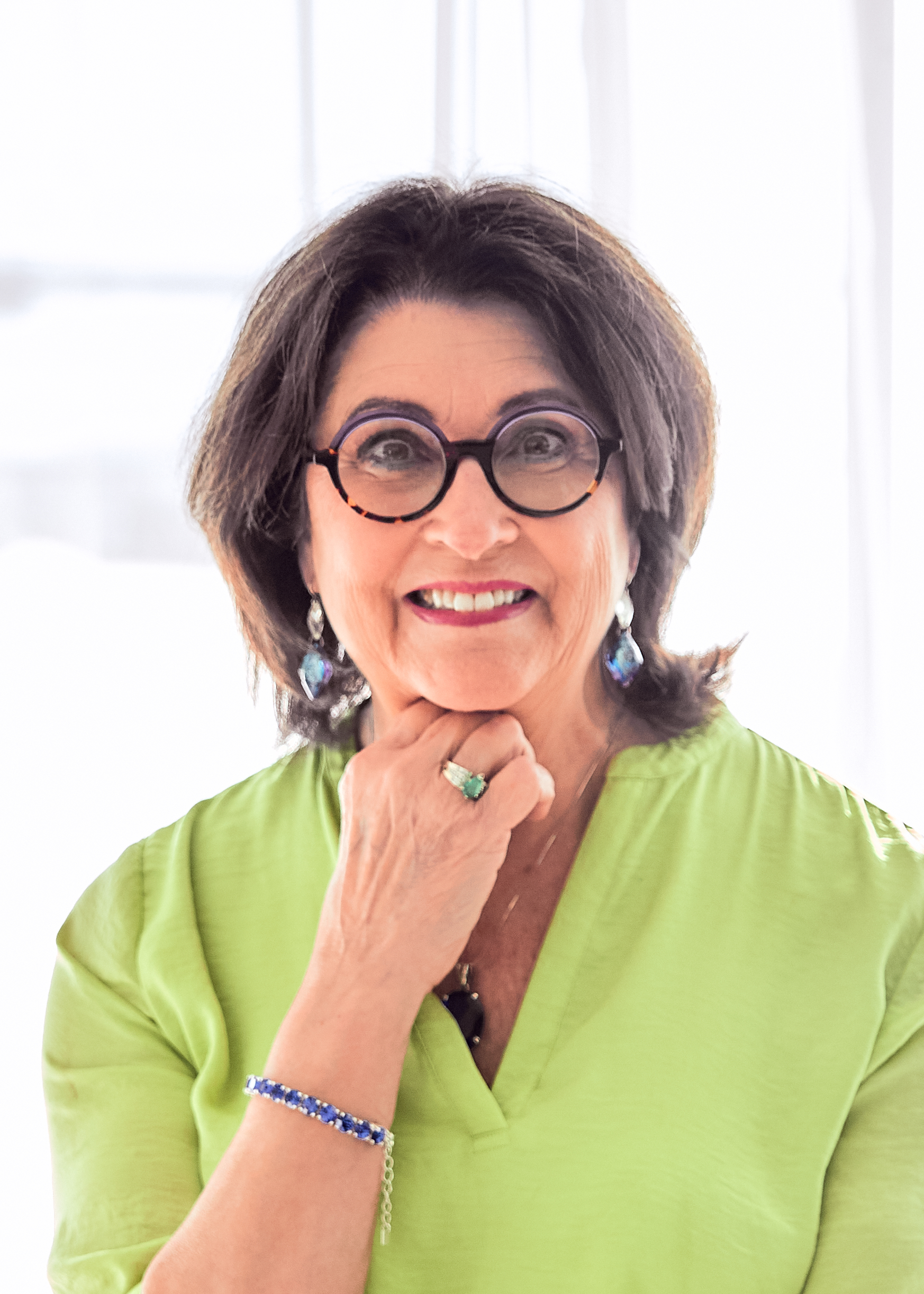
CEO Catherine Holt Coaching
What if the reason talented women stall out has nothing to do with their qualifications and everything to do with how others perceive them versus what they are actually capable of?
Cathy Holt has spent more than 40 years answering that question across political campaigns, corporate boardrooms, DEI consulting, and global governance, including collaborations with the United Nations. She is a Women's Influence Strategist, international speaker, bestselling author, and host and executive producer of Holt Talks the Lead. She is the creator of the Zone of Greatest Influence™, a framework that helps accomplished women own their expertise, strategically position their leadership, and close the gap between how others see them and what they are actually capable of. When women close that gap, they stop being the best-kept secret in the room and start being the ones chosen, promoted, and paid.
JASON - CATHY SEND THE INFO BELOW IN AN EMAIL SO I SIMPLY PASTED THE LINKS HERE. HOPE THAT IS OK?
I'm giving you several if you want to include them in the show notes.
www.cathyholt.com
cathy@catherine-holt.com
https://www.linkedin.com/in/catherine-holt-hts/
https://action.catherine-holt.com/widget/bookings/1-1withcathy (calendar link)
I am grateful for the opportunity you gave me to have a conversation with you on your podcast. If we lived closer, I could see us meeting more regularly for stimulating conversations.
I welcome the opportunity to participate in your group and look forward to all the learning I will get from the participants. …


