Ep240 Mark Mixer - Take Back Control of Your Health Benefits and Lead Like a Fiduciary
Schedule a Game Plan Intro Call Here
This 15-minute call is a chance for us to connect briefly and see if a full Game Plan Session is the right next step. No prep required — just bring your goals or questions, and we’ll explore whether a deeper dive makes sense.
______________________________
Ever feel like your annual benefits renewal is a negotiation you're not allowed to walk away from?
In this episode of Get Unstuck & On Target, host Mike O'Neill sits down with Mark Mixer, CEO of Health One Alliance and Alliant Health Plans, who has spent 40 years helping employers stop handing off their benefits strategy and start owning it. Mark works with companies to move away from the passive, broker-dependent renewal cycle toward a model that actually fits the way employees live and work.
Mark walks Mike through how ICHRA (Individual Coverage Health Reimbursement Arrangements) works as a defined-contribution alternative to traditional group health plans. The comparison to the 401k is direct: instead of picking a plan for everyone, employers give employees a dollar amount and let them choose coverage that fits their family, their doctors, and their budget. In seven years of running this model, Mark says he has never had a client go back to traditional coverage.
Three key topics to look out for:
- How ICHRA shifts the benefits decision from employer-picks to employee-chooses, and why companies that make the move stay with it
- The compliance exposure hiding inside level-funded plans and why most small employers have no idea they're carrying it
- Mark's own getting unstuck moment: the culture shift from "we can't do it for everyone" to "if we can do it for one, we do it"
Mark Mixer 0:00
Within the time that I have access to you, I want you being a raving fan of your fellow employees, meaning you want what's best for them. I don't want you being a raving fan of my company. If you're a raving fan of all the other employees in the company, we'll have a great company.
Mike O'Neill 0:18
Welcome to Get Unstuck and On Target, the weekly podcast that offers senior leaders insights and strategies to not only lead with confidence and vision, but also to achieve groundbreaking results. I'm your host, Mike O'Neill. I coach top-level executives on the power of ethical leadership to forge teams to be as united as they are effective in each episode. Join me for insightful conversations with leaders just like you, providing practical advice to help you get unstuck and propel you and your company forward. Let's get started. Most CEOs treat benefits like a back office problem, something that HR handles, something that the broker figures out. But here's what I've learned: coaching senior leaders, the way you approach benefits says a lot about how you lead. Are you owning decisions or are you deferring them? In this episode, I sit down with someone who has spent 40 years helping employers stop being passive and start leading strategically. So, if you ever felt stuck in a healthcare plan that you didn't design, this one is worth your time. I see this all the time with CEOs of growing companies. Health care costs, they keep climbing renewals, they feel like they're hosted negotiations, and most leaders, they just accept it, because they really don't know that there's another way. My guest today is Mark Mixer, he's the CEO of Health One Alliance and Alliant Health Plans. Mark has spent 40 years turning the traditional health benefits model upside down. He helps employers take back control through smarter, more flexible solutions like ICHRA and HRAs, but what caught my attention about Mark's work is this idea that employers have been kind of conditioned to be passive, handing over benefit decisions to brokers and carriers instead of owning them strategically, and it's that passiveness it creates rising costs, limited options, and the risk of losing valuable talent. So I've invited Mark on because benefit strategy, it's not just an HR issue, it's a leadership decision that affects your ability to build and keep a strong bench. Mark, welcome.
Mark Mixer 2:54
Thank you, Mike. Appreciate
Mike O'Neill 2:56
it. We have the opportunity here. Mark and I are not only in the same hometown, we actually are neighbors. We could have done this in person, but I wanted to have you on for a couple reasons. One, just your way of explaining what many people think is very complex, but if we're going to take back control of healthcare benefits, I would love to just to kind of get some thoughts from from you on that you've been doing this for a long time, but in your experience, why do most employers tend to stay passive when it comes to benefits? They just accept that whatever the broker brings them, I guess that's what we've got to do.
Mark Mixer 3:40
Well, I would imagine part of the answer to that is they're not aware of what other options might be available. That certainly think we have to nod in agreement to that possibility. I think the other is this is not being in the insurance business is not their core model or expertise, yeah, right, they do it because they feel like if I don't, I'm not going to be able to recruit or retain talented people, which is the only reason that you would offer benefits at all, right, and then once you embark on that, you feel like, well, I've gotten encased in this moving vehicle that I could never escape from, and I'm just trying to keep it on the road, and I think you, your analogy of, I feel like every year when I get my renewal, whether that's conveyed directly by the by the insurance carrier or the broker, it does, it feels like a hostage negotiation where you're just trying to mitigate the least amount of harm, but we've forgotten that, hey, if you're not, maybe we could ask it this way, if you perceive, or if your employees perceive that your employee benefits are a hassle, I would argue. Argue that when a benefit becomes a hassle, it's really not a benefit any longer, so it requires, I think, some shock treatment to be able to step back from that and maybe exercise a little bit of due diligence on what other ways might be available that could bring it back to being a benefit to everyone involved, where it's a win-win.
Mike O'Neill 5:24
Yeah, I love how you described that. I kind of, in my mind's eye, I see what can happen is the CEO kind of begins treating benefits almost like a back office issue instead of something that is and should be strategic comment on that.
Mark Mixer 5:43
Well, it is, and I think that's exactly part of the frustration that employers may be experiencing, but not understand why, or perhaps the root of that frustration. Right? I think another element that adds pressure for smaller employers, and when I mean small, I mean 250 300 employees are smaller, right? It's that they think somehow they're responsible for the costs of health care within their organization. They can't influence cost of healthcare within their organization. Not, I'm not saying that talking about better living and more efficacious ways of dieting, or not smoking, those are all great conversations, but if you think they're moving the needle on your health care spend, you're, you're mistaken, they aren't, and in fact, if you're fully insured, anything you do to improve those benefits are just going to improve it for the insurance company's margin, not necessarily for yours. So I think again you've got to come back to taking a more holistic view about benefits. Health insurance tends to take up the biggest part of the spotlight, but only because it's the most expensive, and so if you spend 95% of your time talking about nothing but health insurance as though it's your end all be all of your welfare benefit package. I think you're missing an opportunity to expand that into areas that might be more meaningful to your employees. Here's what we're seeing: empirical data saying the number of employers offering coverage has remained fairly static over the last decade or so, really, but the number of employees accepting it and buying it is on a downward trend. So employers believe, rightfully so, they're being paternalistic, right? Say, I care for my people, I want to offer them something of value, and they, they go, and they, they strain themselves over this. Is the best we can do. We pick a carrier, we pick two or three plans, and then we go out. We say, Mike, here's what we've picked for you. And then Mike looks at it, goes, this doesn't really fit my budget, doesn't fit my family's medical needs, and they just say not just to not have it right or they go another option, go find it somewhere else. Then the employers left dumbfounded, like I don't understand. I offered what I thought was a great benefit, and there's the key: you offered what you thought was a great benefit, instead of all right isolating that and saying hey, instead of doing for all and making it enforcing it upon one, why don't we do for one, right? And make sure that they've got access to a plan that best fits their budget, their needs, etc. And that that's tough for employers to do, because that pulls them out of that paternalistic environment,
Mike O'Neill 8:43
you know. I found myself reflecting on your, your comment, and that is a lot of your clients would be what you described small, but if 250 to 300 employees is considered small, and in the eyes of the federal government, that's a pretty good size business, but all that to say is it is complex, and you use the word paternalistic a moment ago. I don't hear that very often, but that is kind of what we tend to say. We're trying to do the best for our employees, but we're also trying to figure out by that decision, what is in the best interest, and it kind of introduces this concept of ICHRA, and for those who don't know what that is, spell it and kind of explain, if you don't mind, for our viewers and listeners, what ICHRA is, and why that is a possible thing that they should consider in today's climate.
Mark Mixer 9:43
Yeah, maybe a good analogy for it is back in 19 late 1970s this new idea came along that challenged the traditional model of a defined benefit plan called a pension. I right, and this new idea called a 401 k emerged, and it is exactly the same thing that's happening with an ICRA, and ICRA is coming around to say, hey, instead of you, mr. or Miss employer, defining the benefit by picking a plan, instead just allow your employees to do so, you provide the funding for it, right, and then they get to pick where that money goes, just like in your 401 k, 401 k's didn't replace every pension plan out there in ICRAs, individual coverage health reimbursement arrangements, they're not going to replace every traditional approach to benefits, but what ended up happening, employers, as they began to hear about this, said, "Hey, that might be a good fit for my population, and as more and more examined it, they found that, you know, what, this, this was a good fit. 401 K's were actually meant to come alongside pension plans and compliment them, was never intended to replace them. Now today, you got about 70% 75% of all businesses, when they provide a retirement claim, provide it through a defined contribution, which just means money. So, now let's parlay that into the health benefit. When an employer chooses to go this way, life gets incredibly easy, because now all the employer has to do is to figure out how much money they want to give their employees. That's it. They don't have to pick a plan, they don't pick a carrier, they don't have to model, they don't have to do spreadsheets, they don't have to figure out whether this plan is better than that plan, whether a high deductible plan is best for Bob and his kids, or Mary, the bookkeeper, in her and her brood, they just say, "Here's the amount of money, Mike. You go out, you have to buy coverage to secure that money in order to get access to it, but you buy what you need, you buy what's best for you. That is a tremendous relief for many employers, even if there's no savings. Right, this is not a cost containment measure, necessarily. It's a complete structure or restructuring of a strategy of providing benefits that sort of unleashes it and allows each individual employee to pick what's best for that.
Mike O'Neill 12:15
Mark, you described that in a way that was so easy to relate to. You stressed that it makes life easier for business owners, for senior leaders. How about the employees who have the choices to make? Does it feel like a burden, perhaps, to have to make all those choices, or are they empowered by I now can choose what's best for me and my family?
Mark Mixer 12:39
I think, in fairness, initially it's a little overwhelming, because if you've been in corporate, in a corporate environment where you get your health insurance, for example, for any length of time, you know the drill. Around November of every year, you get a packet that says, 'Here's your choices, right? And there might be two plans to choose from; sometimes there's only one, sometimes there's three. Doesn't matter, but you have a very limited choice, right? And you just look at the train guy, this is the best one, that's that's the one we're gonna go with. Now, all of a sudden, your employer says, "Hey, Mike, instead you get $1,000 to go spend. Well, initially, you go, "Wow, I just hit the jackpot. Well, the problem is you don't really know how much health insurance really costs, so you have to go shop, and when you go shop, and you realize just in our small rural town here in Northwest Georgia, right, there are over 100 policies for you to choose from.
Mike O'Neill 13:38
Good
Mark Mixer 13:38
holy, we just swung the pendulum the other way, and in fairness, most employees, when they are faced with, like, how am I supposed to make a decision among 100 plus, you know, how you do it the same way you choose macaroni and cheese, the same way you choose a car to buy or a house, it's based on price, what can you afford, based on what your needs are, you have a particular hospital or doctor that you want to make sure you have access to, and we narrow that down very quickly, and it ends up, ironically, it ends up being between about two or three plans. Is it this one or this one? Exactly where you were, once you've been through that, then it's not, it's not intimidating at all, but that initial time when you go through it, the cure can sometimes be the curse in that initial foray under, and it's understandable most employers are going to want some assistance, whether that's through a professional broker, right, or a professional administrator of Icarus to come alongside their employees and assist them in that process.
Mike O'Neill 14:42
You know, I'd love to come back, if you don't mind, to that decision maker. Traditionally, they felt a sense of paternalism. I want to do what's best for all. This is opening up options, but that does require almost a mindset. Shift for these founders, for these senior leaders to be able to let go, if that's the right term, and trust that their employees are going to make what is the best decisions for them and their family. When you're sitting across from these CEOs, these company founders, and they're saying, okay, I get it, it's supposed to be easier for me. How do you help them make that mindset shift that would open up this as something that really is actually it could very well be it's to not only to the company's benefit but also to the employees.
Mark Mixer 15:38
We we take the consultive approach of simply listening to what pain points that employer sort of begins to anticipate, and they tend to fall within a fairly broad guardrail. They'll be like, well, my employees aren't - I'm concerned my employees aren't savvy enough to be able to pick the right plan, right? And then we say we'll bring along experts that will assist them in that process. Well, what happens when they have a problem with an insurance company? Well, that's why we're here to take care of that problem. They're able to call someone and get, you know, care. And then when someone says, "Well, I don't know if I believe you, it's like, "Fine, talk to our hundreds of other clients, we'll be happy to let you hear their experience. And then you bring data to the table. In our case, we've been doing this. This is our seventh year of doing this. Here's.. and I did not expect this. This was a shot for me. We've never had a client go back to traditional coverage.
Mike O'Neill 16:41
Interesting.
Mark Mixer 16:41
Now, not every person we talked to is is a great candidate for an HRA, for an individual coverage HRA, but once they make that decision, we've never had anybody go back. Not saying there's no one ever in the history of time that's ever not gone back, it's just not been our experience,
Mike O'Neill 17:02
I You mentioned earlier about the benefit administration, what the total wellness approach is something that can affect retention. You want to keep your good employees. In what ways have you found these new options as helpful, and just that
Mark Mixer 17:30
we wrote a fairly large employer that had employees that lived in fairly diversified areas, right? It just, let's just keep it local. Here we had people that lived in Chattanooga, they lived over in Gainesville, they lived down in Atlanta, and they would just commute here to work.
Mike O'Neill 17:51
Now, man, are up for those who are listening, and we have listeners literally from all over the world. What Mark just said is that is within about an hour, hour and a half max commute distance. Thank you.
Mark Mixer 18:03
But okay, now take that and apply it to wherever you happen to be, you know, where you happen to be living or working. Where does your healthcare take place, though? Typically, your health care takes place in a fairly small radius around where you live, not necessarily where you work well, as costs for healthcare continue to rise most of the time, the only way employers can minimize those increases is by raising deductibles by cost sharing more with employees. Hey, we're willing to pay 70% but 30% of a rising cost is now goes to the employee that continues to go up. Well, another way that that's done is they begin to say, hey, we need to tailor the network in a more tighter geographic location, right? Well, now all of a sudden the plan that's being offered to you may have doctors and hospitals that are available in abundance, where you live, I mean, where you work, but maybe not where you live.
Mike O'Neill 19:05
Yeah,
Mark Mixer 19:06
with an ICHRA, in that particular case, I've had many employees come and say, "Holy cow, for the first time I'm able to buy a health plan where I could access doctors where my family
Mike O'Neill 19:18
is. Yeah,
Mark Mixer 19:18
not where I work. Now, that does that occur for every single person? No, of course it doesn't. Right, but that's a great illustration of where that flexibility comes into play. The other place you hear it for is this: hey, I may have - I may want to put my kids on one plan, a copay plan, for example, because they always have ear infections, they're the ones always getting sick. But my wife and I were healthy, and we want to take advantage of maybe an HSA, or we just don't need a low deductible, you know, or a copay plan. Then you put mom and dad on one plan, you put the kids on another. A traditional group plan will never be able to accommodate that. Whereas an ICHRA can doesn't mean it's the right choice for you, but, but now you get that flexibility.
Mike O'Neill 20:07
Yeah, it may sound like I'm geeking out on Icarus, but I am most interested in this, in large part because what we're talking about, it's a major spend, and and to step back, you know, Mark, you've been doing this for a long time, and you've seen probably some remarkable, radical changes in healthcare, and the kinds of things we were talking about. What might be something that we haven't talked about that you think is critically important for us to be even aware of, or trends that you're seeing that leaders might need to kind of sit up and take notice of?
Mark Mixer 20:51
Yeah, I, I speak around the country really in an effort to save the small employer. Now it now in that definition, I'm really talking about maybe the 50 and fewer, right? That makes up 97 98% of almost everybody's businesses in the country. Most of the employees are in bigger companies, if you do an account, but the number of businesses, they tend to be, you know, fairly small, unfortunate. Unfortunately, what we've created is an environment where small employers think that they have the same resources and influence that a large employer does, and they simply don't. They pay more, they're impacted more by high claimants, and when you step back from this. The cost of taking care of sick people is incredibly expensive. It's not going down. Okay, and so you're just trying to hold a tissue up in the face of a hurricane, and you're failing, and you're frustrated because it's like, well, I have no control. It's like, you're right, you don't have any control, and part of understanding a new strategy to benefits is understanding that you don't have control. Therefore, what options do you consider in order to continue to offer a benefit, such as health insurance, in a way again that not only is best for you, keep the lights on, because it's an ever increasing cost, but it's also a cost to your employees, right. We all know that if you have folks that have health insurance get care at a much quicker pace, at the right price, the right time, right, versus someone who's uninsured or not insured at all, that creates presenteeism, or it lowers absenteeism, those are all benefits for a company. There's always a benefit for why a company offers that benefit, but for small employers, particularly in most states, California, I always pick on California. It's easy to pick on California, I guess. We're followed by. I actually think they did something I wish every state had done. You're not allowed to buy stop loss for employers that have less than 100 employees.
Mike O'Neill 23:10
Interesting.
Mark Mixer 23:11
And if I'm on the other end of this podcast, I'm going, "Who cares about software? What are you talking about? What's happened in the fully insured market for small employers is they can't afford a fully insured product to just get an insurance company come in and take the risk, so what insurance companies have done is they've said, well, we'll create a self-funded product, but we'll make it look, walk, talk, and smell just like a fully insured product, except it's not. We call that level funded, and what they do is they predict what your claims are going to be, then they just normalize it over 12 months, right? But then they say, but Mike, you're the insurance company, by the way, right? I'm not, I'm not the insurance company, or you're the insurance company, but we're going to sell you our stop loss coverage, which isn't insurance at all, right? It's simply an indemnification for a claim that might exceed your limits. Okay, that are set in the plan, but in doing so, you take on a tremendous amount of complexity that is required by the federal government to be compliant, and with the new law that just passed with the spending bill that just passed last week, those compliance issues got incredibly more complex. I believe most small employers, where that's where they've moved to, because it's the only place it was the only place left for them to move until ICR came along, they have no idea the amount of of compliance risk that they're holding, and it's all because they've been told this is just like this is just like fully insured, don't worry about it, it's nothing like fully insured, right, and if you're not aware of that risk and you're not aware of those compliance. It's
Mike O'Neill 25:00
issues of where they and on whose shoulder they sit. You need to be having a conversation with your broker. I'm glad you added that, Mark. I'd like to, if you don't mind, let's talk about Mark a bit. As you know, this show is about getting unstuck. Can you think of a time, maybe in your own career, where you realize that what was the traditional model, it was broken, kind of like insurance. And when you came to that country, what did you decide to do about that? How did you get unstuck?
Mark Mixer 25:34
Yeah, it was, I guess it was about 12 years ago, we we had, we were a small company at the time, like we only had about 30 employees today, we got about 300 and as I was kind of rising through the ranks of leadership, you learned how to read the room, you learned how to, you learned how to behave in a way that was acceptable to the culture of the organization, wherever you were, right? And I would wager that, for most, for the most part, most places are fine places to work, right. It's rare that you are truly in a hostile work environment. I know they exist, but, but as I began to look at and have authority over what that culture was. I began to see where we'd fallen into the trap, much like employers do with welfare benefit plans, right? They just go, well, this is just the way it's done. We would have decisions that would need to be made in the idea, and I actually opened with this. Well, we can't do that. I know it'd be great if we could, but if I go, why can't we do it? Well, because we can't do it for everybody, it just wouldn't be fair. And that gnawed on me for a long time when I actually began to find a way to battle against that. Today, in our culture, we actually look at it, though. If we can do it for one, we do it. Don't care if we can't do it for everyone. We're not about fairness, we're about taking care of our people in a holistic fashion. My belief is this: if I take care of you, not only while you're here eight hours a day, okay, but I'm also concerned about what your passions are, who you are as a dad or a brother, you know, or you know, a friend, you, those are that takes care of you as a person, I can help that within the time that I have access to you, I want you being a raving fan of your fellow employees, meaning you want what's best for them. I don't want you being a raving fan of my company. I, if, if you're a raving fan of all the other employees in the company, we'll have a great company that'll be a direct result of it. Just be a fan of the person next to you, right, that sits alongside you and does the work that was a place where we were stuck. I was stuck for a long time, because in this business, in the health insurance business, you got to develop kind of a thick skin, because you make decisions that impact people's lives.
Mike O'Neill 28:13
Yeah,
Mark Mixer 28:14
right. And it's easy to become, you know, you kind of get scarred from that, and you develop a, you know, like, hey, sorry, I got to make hard decisions, too bad, and we forget the human compassionate side of running a company that matters, and that is, that's a hard thing to do, it's a hard thing to keep alive, not going to shy away from that, but that to me, that was a, that was a key moment, sort of, in my career as a leader.
Mike O'Neill 28:46
That's a great illustration. I appreciate you sharing that, Mark. You know, as we start our wind down of this episode, I want to kind of come back to what started the conversation, and that is the frustration with rising cost and the like, so for CEOs out there who are watching this or listening to this, and they really are frustrated about the cost, but they just don't know where to start. What would be a step that you would recommend that these leaders could take this week?
Mark Mixer 29:22
Well, it would be incredulous to think that you can't answer that without saying Google or Chat GBT. I mean, I don't know if you asked Chat GBT what two plus two is anymore, it seems like, right? I think there's a plethora of information that's out there that someone could take a look at on their own. Right now, you always have to worry about, well, who's credible, who's not, etc. But I think we all have a kind of a innate sense of, you know, is this legit kind of thing. If you're going to talk to somebody, I don't think there's anybody better to talk to than your professional broker. Who's truly bringing you ideas and strategies, but to that defense, many brokers might find themselves in a defensive position around this, because it's new, they may not understand it completely. That's absolutely a real factor today, because ICRA is brand new, right? Every single week we encounter a situation where we go, we don't know what the rules are, because there are no rules, and we have to work with Treasury, or we work with CMS, or, you know, ERISA, in order to figure out what the right way to do this is. So, recognizing that it's new, but in doing so, it is a tool that's available. It's been vetted by three, you know, of the federal agencies out there. So, this is not some like special loophole that we found in the law. It's not going anywhere. Whether it's right for you, does it almost doesn't matter. It matters that you, as a fiduciary, explored all the options that are best for your employees, and that is where the spotlight is shining today. All the lawsuits around ERISA today are beginning to shift over to the welfare plan. Right, are you doing what's in best interest of the participants, not the employer, that's the very definition of the fiduciary. So, I would, I would look at it through that lens. Get guidance. Guidance may come from your attorney as well, or your CPA, as well. But certainly, a professional benefit broker is a deep, deep resource for you.
Mike O'Neill 31:40
Mark, this was clear. This was practical and overdue for most leaders. Thank you for sharing your, your expertise and clearly your passion. What's the best way for people to connect with you who want to learn more about you and your work?
Mark Mixer 31:58
Uh, LinkedIn, I guess, is always always one mark mixer, but our ICRA site, I think, has, I think, a great kind of pool of information you might be able to draw from, and that's just HRA simple.com and then on there you'd find my email address, and but any, any of us here at the at the house here would be happy to take care of your answered questions. Where I wrote the three hour certification course for national brokers in this country, really, and my passion is for education. My goal is not to get you to become a client. My goal is to give you information that you can then make a meaningful decision around, and that's that. Is if I can help do that, be happy to guide you or direct you in the right place. We will put
Mike O'Neill 33:00
those links that Mark just mentioned in the show notes, so if you're driving and listening, don't worry about it. It will be in the show notes, where you can reach out to him and to his organization to our listeners. Here's what I would invite: if today's conversation made you realize that you've probably been too passive with your benefit strategy, don't ignore that. Reach out to Mark. Those links are there in the show notes. Take full advantage of them. And if you're a senior leader and you feel capable, but constrained, you're doing good work, but you don't have the clarity or the confidence or the traction you want, I'd be glad to help you think that through. I offer complimentary two hour game plan sessions. These are for senior leaders who want clarity, not noise. There's no pitch, there's no pressure, just a practical next step. You'll find a link in the show notes if that's of interest to you or someone you know. So, for our listeners, thank you for doing the real work that leadership requires, and I hope that this will help you get unstuck and on target. Thank you for joining us for this episode of Get Unstuck and On Target. I hope you've gained insights to help you lead with confidence and drive your organization forward. Remember, at Bench Builders, we're committed to your success, your leadership excellence, and your strategic growth. If you've enjoyed our conversation today, please leave a review, rate, and subscribe to keep up with our latest episodes. This show really grows when listeners like you share it with others. Who do you know who needs to hear what we talked about today? Until next time, I encourage you to stay focused on the target and continue to break new ground on your leadership path,
AI VO 34:59
you. This show is powered by Media Leads. To get your next great podcast produced, go to Media Leads co.com.
CEO
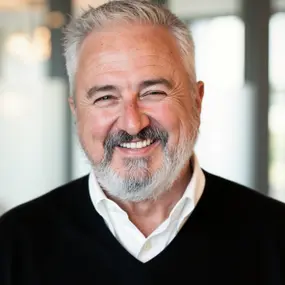
Mark has dedicated 40 years to the insurance industry, shaping the landscape of PPOs, HMOs, and ICHRAs through decades in senior leadership.
As CEO of a health insurance company, Mark oversees a firm that writes 1 in every 13 individual market policies in Georgia and lower Tennessee. His companies’ contributions to innovation in personal health have been featured on PBS’s "Viewpoint with Dennis Quaid" (2024) and numerous testimonies before federal and state agencies.
A recognized industry innovator, he wrote one of the first large employer ICHRA plans in the U.S. (2020), co-founded The HRA Council (2021), and co-authored NABIP’s ICHRA Certification Course (2023).
Mark champions education, legislative advocacy, and market growth for ICHRA adoption nationwide. In 2025, he became the first Chairman Emeritus of The HRA Council.


